The Mystic Estate journal
How We Match Each Puppy With the Right Family
Mystic Estate · July 22, 2026
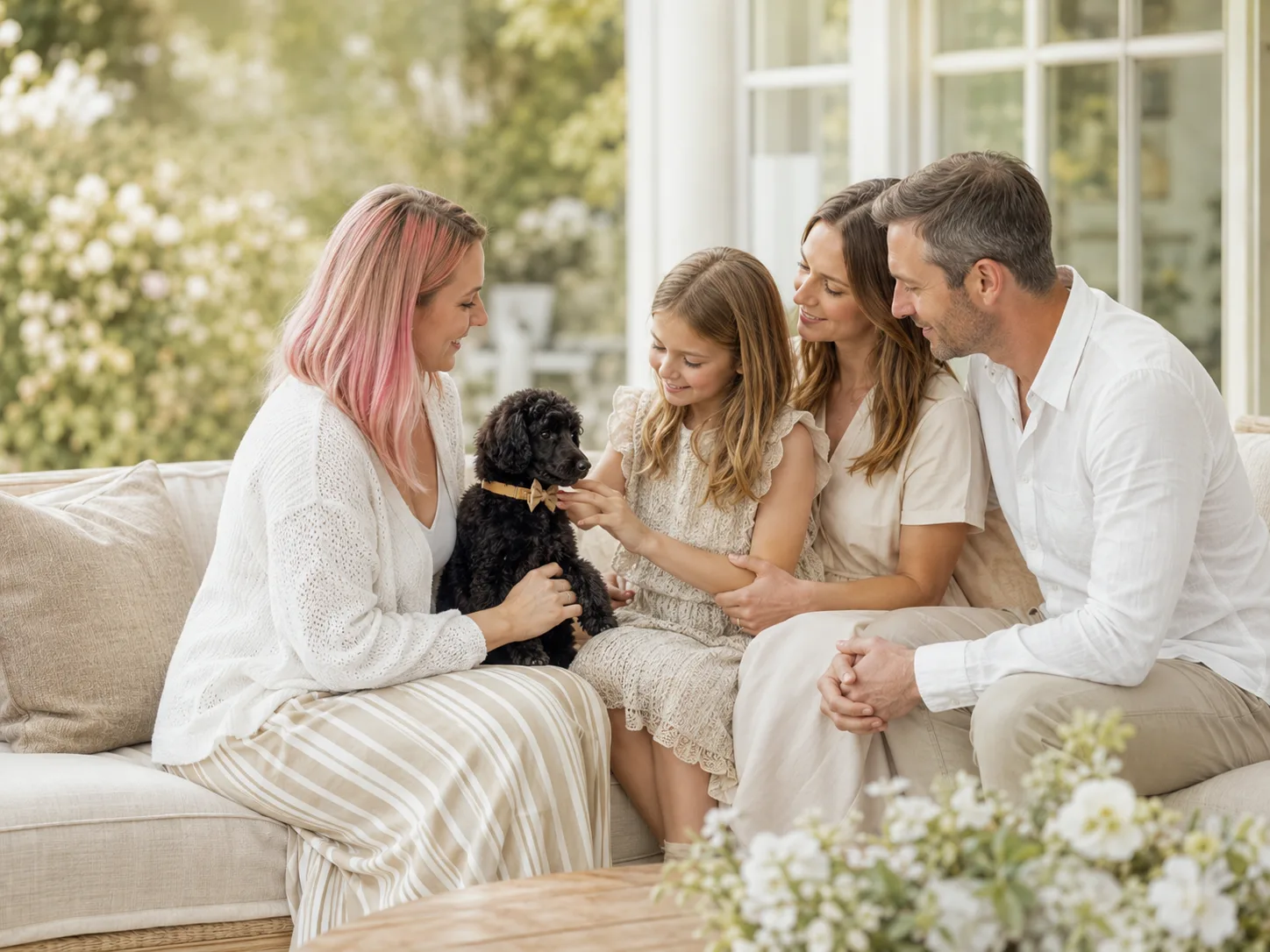
Choosing a puppy is emotional. A photograph may catch your eye, a color may feel special, or one lively puppy may make an unforgettable first impression. But the best companion for your family is rarely chosen by one beautiful moment. At Mystic Estate, we match each puppy with the right family by learning how people truly live and by watching how each puppy moves through many ordinary days.
Our goal is not to label a young puppy or promise a perfectly predictable adult dog. Puppies are still developing, and every relationship will be shaped by training, socialization, health, and life at home. Thoughtful puppy matching simply gives both sides a stronger beginning: a family receives a puppy whose emerging tendencies fit its household, and the puppy enters a home prepared to understand and support those tendencies.
The short version: how thoughtful puppy matching works
- We begin with your real household. We ask about people, pets, schedules, experience, activity, training hopes, and the kind of companionship you want.
- We observe the whole litter over time. We notice patterns during play, rest, handling, novelty, grooming practice, problem-solving, and connection with people.
- We look beyond one test or one visit. A single puppy temperament assessment is useful context, not a crystal ball.
- We compare needs, not just preferences. Color and sex can be part of the conversation, but energy, sensitivity, engagement, and household fit matter more.
- We explain the recommendation. Families should understand why a puppy appears well suited to them and what that puppy may need after going home.
- We stay connected. A good match is the beginning of breeder support, not the end of it.
Matching starts with the family, not the puppy
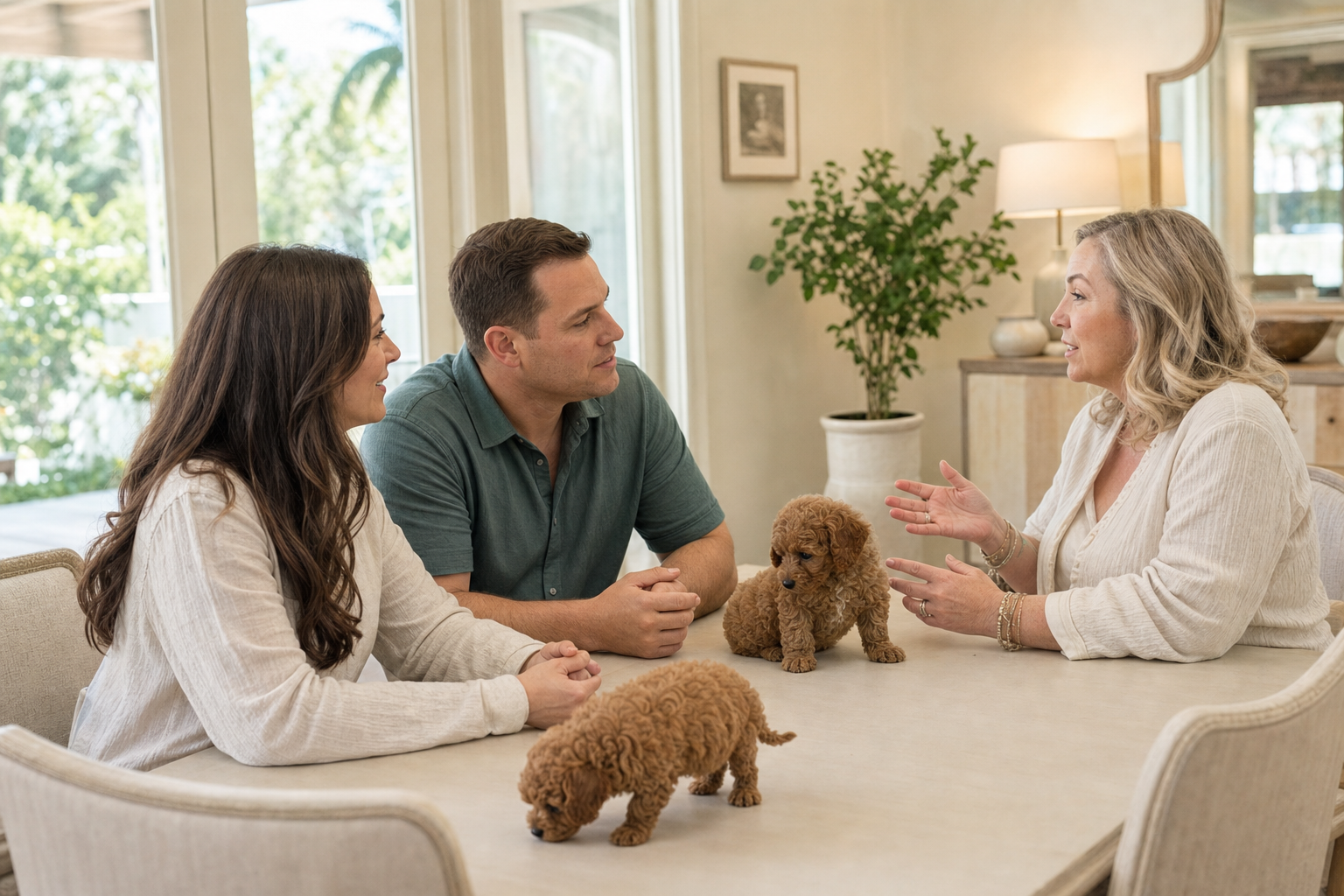
Before we can recommend a puppy, we need a clear picture of the home waiting on the other side. The American Kennel Club's guidance on screening puppy homes describes the same basic principle: responsible breeders ask about living conditions, time alone, other pets, caregivers, and expectations because a good match depends on the life a puppy will actually live.
Our puppy application is not a contest and there is no perfect set of answers. It helps us understand practical details that can change a recommendation:
- Who lives in the home, including the ages and dog experience of children?
- Are there resident dogs, cats, or other animals?
- How long will the puppy usually be alone on a weekday?
- Is the household quiet and predictable, busy and social, or somewhere in between?
- What kind of daily walking, training, play, travel, and enrichment feels realistic?
- Does the family hope for a close companion, a confident adventure partner, a future sport prospect, or a flexible family dog?
- How comfortable is the family with grooming practice, puppy management, and asking for help?
Honest answers help far more than ideal answers. If a puppy will share a small home with a calm older dog, attend a busy family schedule, or grow beside young children, we want to know. The point is not to exclude good homes. It is to make a recommendation grounded in real life.
We watch patterns over time
A young puppy can be sleepy during a visit, startled during a formal exercise, unusually bold after a long nap, or distracted because the room is new. That is why we do not reduce a puppy to one score or one first impression. The AKC's overview of canine temperament and puppy assessments notes that a one-day test is a snapshot and should not be the only basis for deciding whether a dog is a good fit.
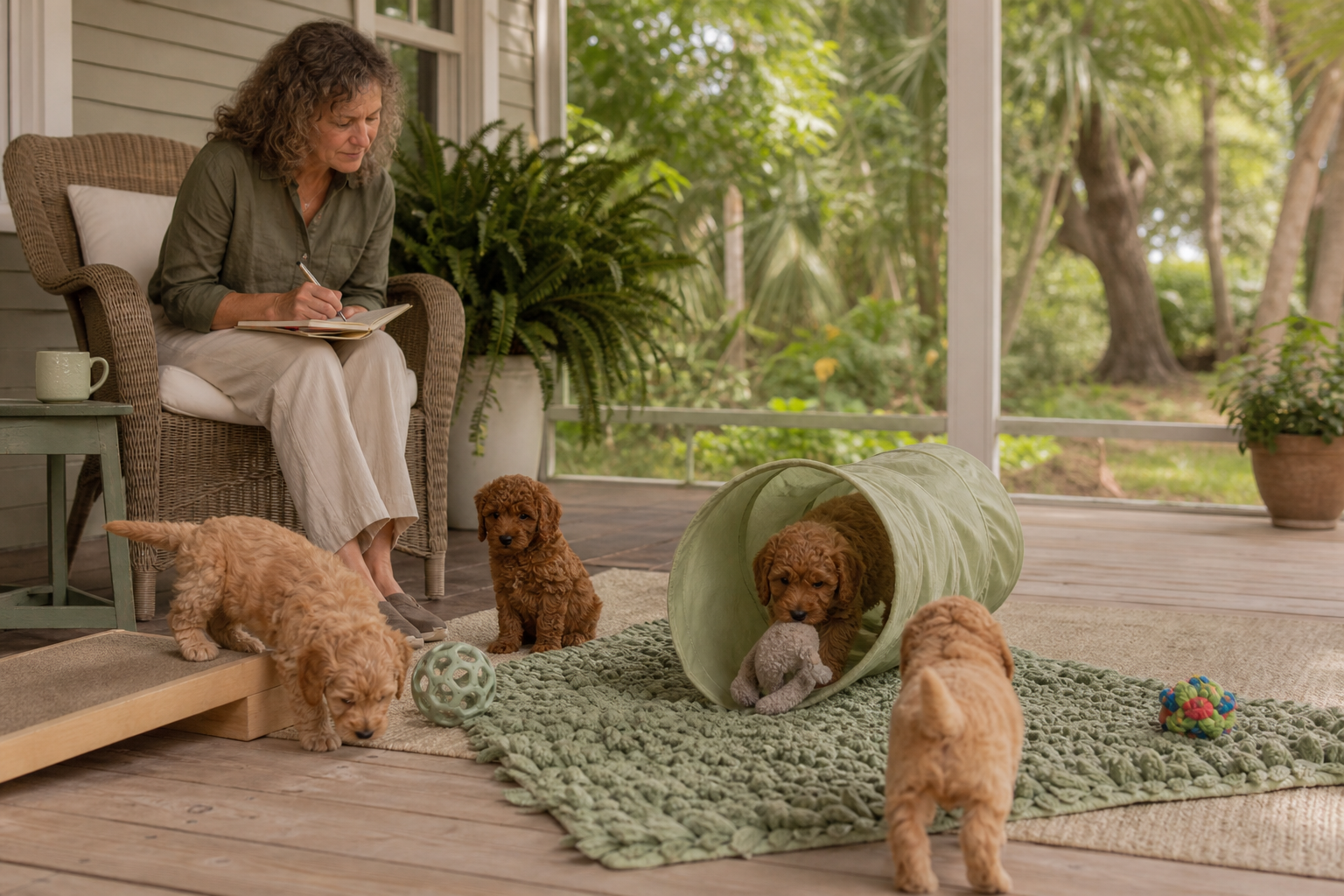
Breeders have a different vantage point from a visitor. We see the puppies wake, eat, play, settle, object, recover, reconnect, and try again. We can compare what happens on a quiet morning with what happens when there is a new sound, surface, person, grooming tool, or simple challenge.
What we notice during everyday observation
- Curiosity: Does the puppy investigate something new immediately, watch first, or seek support before approaching?
- Recovery: After a mild surprise or frustration, how readily does the puppy relax and re-engage?
- Human connection: Does the puppy often check in, enjoy interactive play, or prefer to explore more independently?
- Activity and persistence: How much movement and problem-solving does the puppy seek, and how easily can the puppy settle afterward?
- Social style: Is play with littermates direct and physical, gentle and reciprocal, or more selective?
- Handling comfort: How does the puppy respond to being held, brushed, having paws touched, and other brief cooperative-care practice?
- Adaptability: How does the puppy respond when a familiar routine changes in a small, age-appropriate way?
These are tendencies, not permanent identities. A cautious pause can be thoughtful observation, not weakness. High engagement can be delightful in a home that enjoys training, but tiring in a home hoping for very little interaction. Independence can suit one family beautifully and leave another wishing for more constant closeness. Context turns an observation into a useful match.
Upbringing matters alongside temperament
Temperament is not created by one influence. Family lines matter, early maternal care matters, and the environment in which puppies grow matters. The official Poodle standard shared by the Poodle Club of America describes the breed as active and intelligent, but the standard cannot tell you which individual puppy will be the most persistent explorer, the softest observer, or the quickest to settle beside a person.
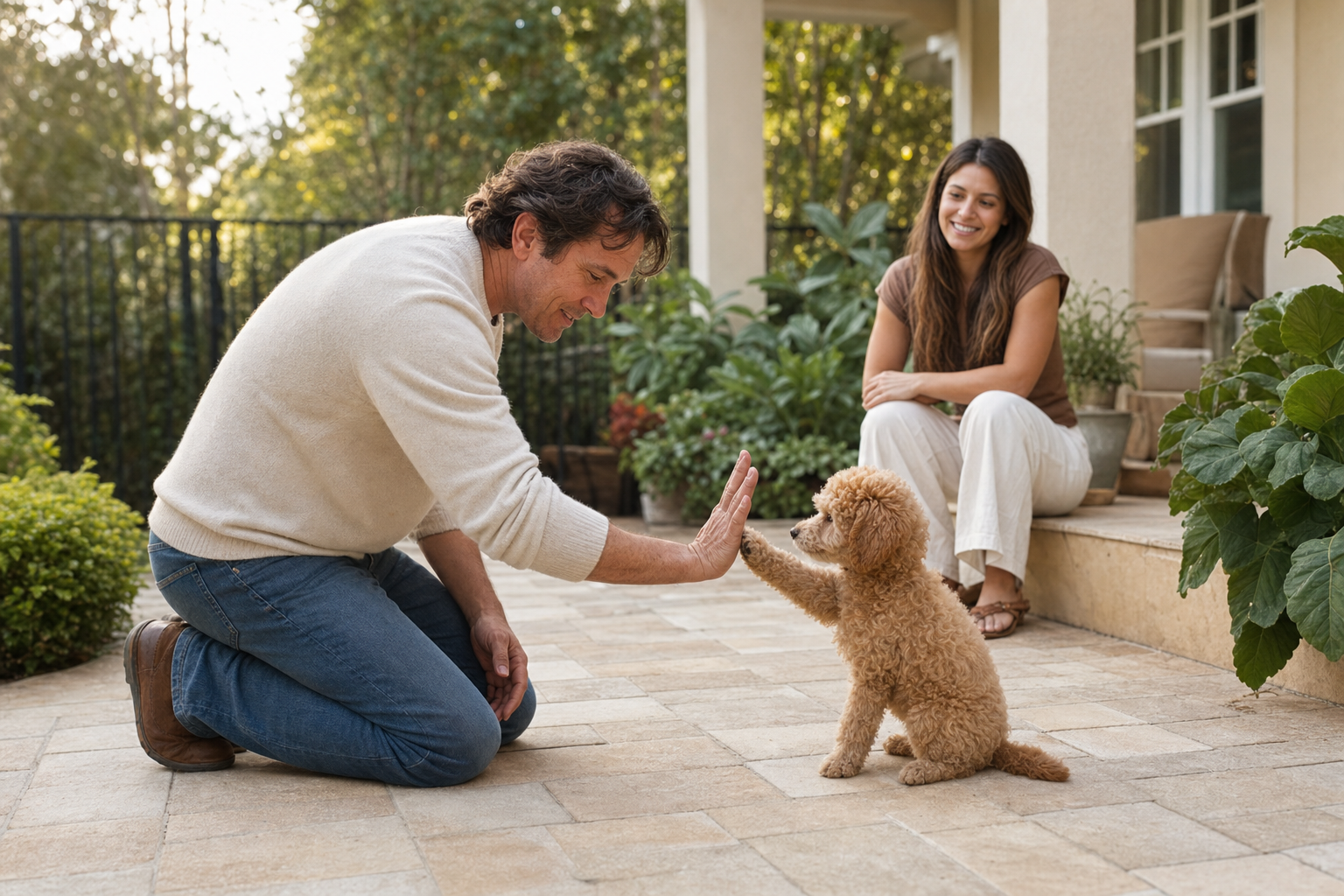
Appropriate early experiences help puppies build confidence and flexibility. We use gentle, age-appropriate exposure to people, household life, surfaces, sounds, handling, rest routines, and simple problem-solving. We do not try to overwhelm puppies in the name of making them “bombproof.” The American Veterinary Society of Animal Behavior's puppy socialization guidance emphasizes the importance of safe early socialization, while its current training guidance supports reward-based methods.
That foundation continues after pickup. Even an excellent initial match needs patient training, protected rest, thoughtful socialization, veterinary care, and realistic expectations through adolescence. Families can use our guide to the first week with a Miniature Poodle puppy to make the transition calmer.
We match energy and engagement, not labels
Words such as “calm,” “confident,” and “outgoing” sound simple, but they can mean different things to different people. A family may say it wants a calm puppy when it really wants a puppy who can recover after excitement. Another may ask for the most outgoing puppy when it wants a dog comfortable joining family activities without needing to greet every person.
We translate broad preferences into daily-life questions:
- Would you enjoy several short training games every day?
- Do you want a puppy likely to seek frequent interaction, or one comfortable occupying itself for short periods?
- How noisy and active is the home during the busiest hour of the day?
- Will the dog regularly visit new places, or is home life the center of the routine?
- Do you prefer a puppy who approaches novelty quickly, or are you comfortable helping a more thoughtful puppy build confidence?
The AKC advises puppy buyers to talk openly with their breeder because the breeder has experience observing the litter and can help select a puppy for the buyer's needs. Its guide to choosing the right dog also reminds families that every dog is an individual. We agree: the match should honor both the puppy in front of us and the people waiting at home.
Children, resident pets, and first-time owners
Family structure does not decide the match by itself, but it shapes what support may be needed. A home with young children benefits from adults who can supervise every interaction, protect a puppy's sleep, and teach both child and puppy how to disengage. A home with a senior dog may need a puppy whose play style is easier to interrupt and a plan for separate rest areas. A first-time owner may thrive with an engaged, resilient puppy and clear breeder guidance rather than the most intense puppy in the litter.
We also consider the resident animals as individuals. “Good with dogs” is too broad to describe every introduction. Size, age, health, play style, resource management, and the resident pet's ability to take space all matter. A thoughtful match includes a transition plan, not just a hopeful assumption.
Color and sex can be preferences—not the entire plan
Families are welcome to tell us which colors or sex they prefer. Those details can be meaningful, and sometimes more than one puppy fits the household equally well. But appearance should not outweigh the traits a family will live with every day.
If these choices are on your mind, read our guides to Miniature Poodle colors and male versus female Miniature Poodles. Both come back to the same truth: individual temperament, health, upbringing, and the family's commitment matter more than a simple label.
How the final match comes together
We do not need to force a final decision when puppies are newborns. Early preferences can be noted, but the useful picture becomes clearer as the litter develops. By the time a match is recommended, we are bringing together several kinds of information:
- Your application and conversations about the home, routine, experience, goals, and non-negotiables.
- Our knowledge of the parents and family lines, including health information and the temperaments we know firsthand. Families can learn more about our parent dogs and review what responsible Miniature Poodle health testing should include.
- Repeated observations of each puppy in familiar life and age-appropriate new situations.
- Your preferences, considered with enough flexibility to protect the deeper fit.
- The needs of the whole litter, so every puppy—not only the first chosen—has the best available path.
When we recommend a puppy, we share the reasoning in plain language: what we have observed, why those patterns fit the household, and what the family should continue supporting. The match should feel thoughtful rather than mysterious.
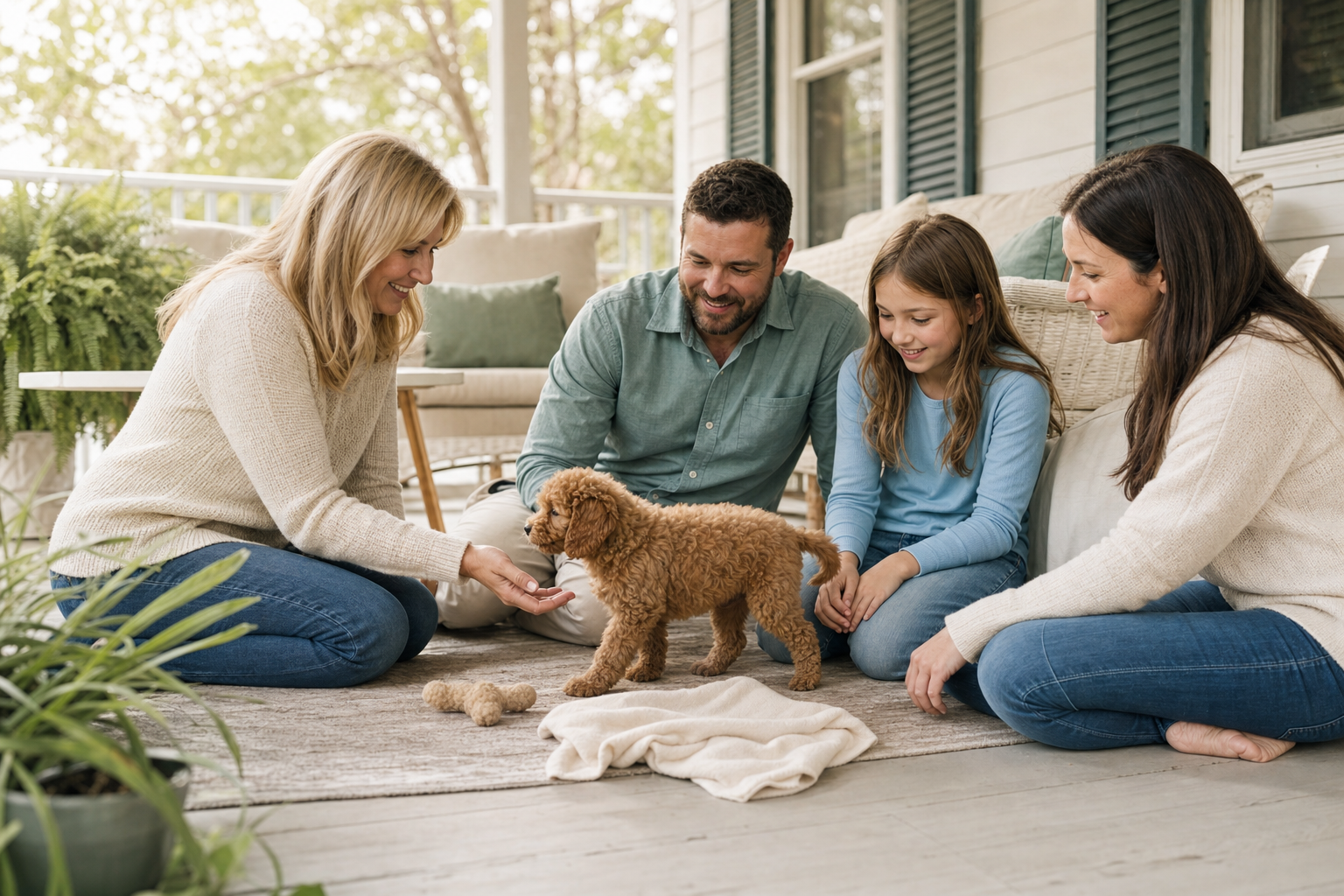
What puppy matching can—and cannot—promise
A careful process can improve the odds that a puppy's emerging tendencies suit the family's routine. It cannot guarantee a finished adult personality, prevent every training challenge, or replace the work of building trust. Puppies change as they mature, and behavior is affected by health, learning, environment, stress, and daily experience.
We are cautious about absolute promises. Instead, we offer an informed recommendation and a support relationship. Families should expect to keep communicating, especially when routines change or a new behavior raises questions.
How families can help us make the best recommendation
- Describe weekdays, not vacations. Tell us what the puppy's most ordinary day will look like.
- Share concerns early. Children, allergies, resident pets, travel, work changes, and training experience are useful context.
- Separate preferences from requirements. A favorite color is different from a household need.
- Stay open to the explanation. The puppy who photographs most dramatically may not be the puppy whose rhythms fit yours best.
- Prepare for the puppy you receive. Use the recommendation to plan sleep, management, training, grooming, and safe socialization.
- Keep in touch. Updates help us support your family and continue learning from the dogs we raise.
Frequently asked questions
Do families get to choose their puppy?
We welcome preferences and want families to feel heard. When several puppies appear equally suitable, preferences may help decide. When one puppy is a clearly stronger fit, we will explain why we recommend that puppy. The purpose is partnership, not control.
When is a puppy match decided?
The picture develops gradually. We do not make a lifelong prediction from newborn behavior. Family conversations can begin early, while the final recommendation waits for enough age-appropriate observation to be useful.
Can a puppy temperament test predict the adult dog?
No single test can do that. An assessment may add helpful information, but we combine it with daily observation, the puppy's upbringing, knowledge of the family lines, and the future home's needs.
What if there is no suitable puppy in the current litter?
Waiting can be the most responsible answer. A thoughtful breeder should be willing to say that a particular litter or puppy is not the right fit rather than stretch the truth to complete a placement.
Does breeder support end when the puppy goes home?
It should not. Questions about settling in, training, grooming, behavior, and development are normal. We want families to reach out early so small concerns can be understood before they become larger frustrations.
A good match is a thoughtful beginning
How we match puppies with families comes down to listening carefully, observing patiently, and valuing the life ahead more than the excitement of choosing first. We learn the household, watch each puppy across real situations, compare the patterns that matter, and explain the recommendation with humility about what no one can guarantee.
If you are considering a Mystic Estate Miniature Poodle, explore our puppy plans and availability, complete the adoption application, or contact us with your questions. The more honestly we understand your family, the more thoughtfully we can help you welcome the puppy who is ready to grow with you.
Trusted resources
- American Kennel Club: choosing the right dog and working with a breeder
- American Kennel Club: what temperament means and the limits of one-day assessments
- American Kennel Club: screening puppy homes for a responsible match
- American Veterinary Society of Animal Behavior: puppy socialization and humane training position statements
- Poodle Club of America: official Poodle breed standard

From our home to yours.
Meet the puppies behind the stories.
Meet our miniature poodles and tell Helen a little about the home you’re hoping to share.

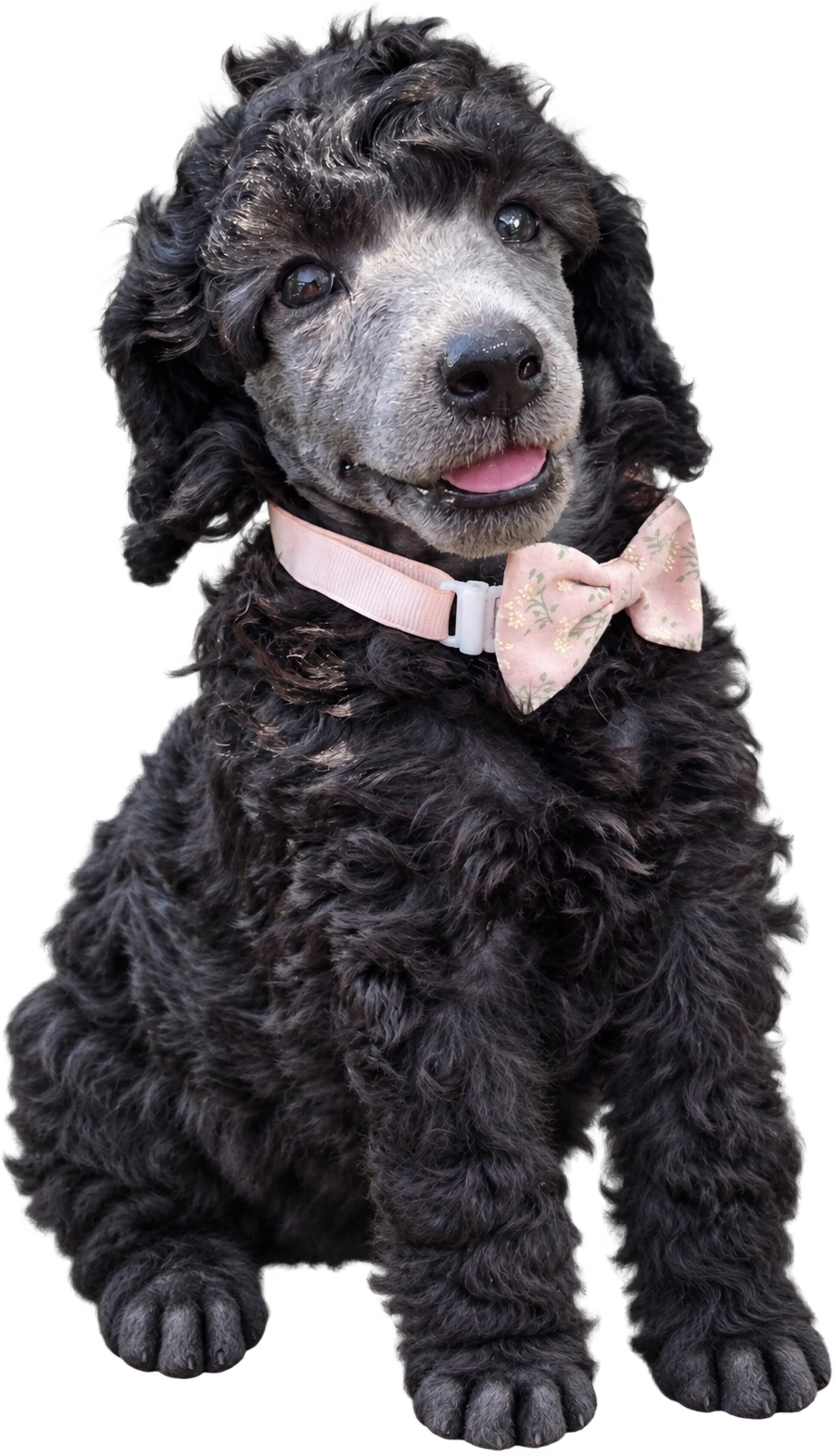
Hi, I’m
Sterling!