The Mystic Estate journal
Your Miniature Poodle Puppy’s First Week at Home
Mystic Estate · July 16, 2026
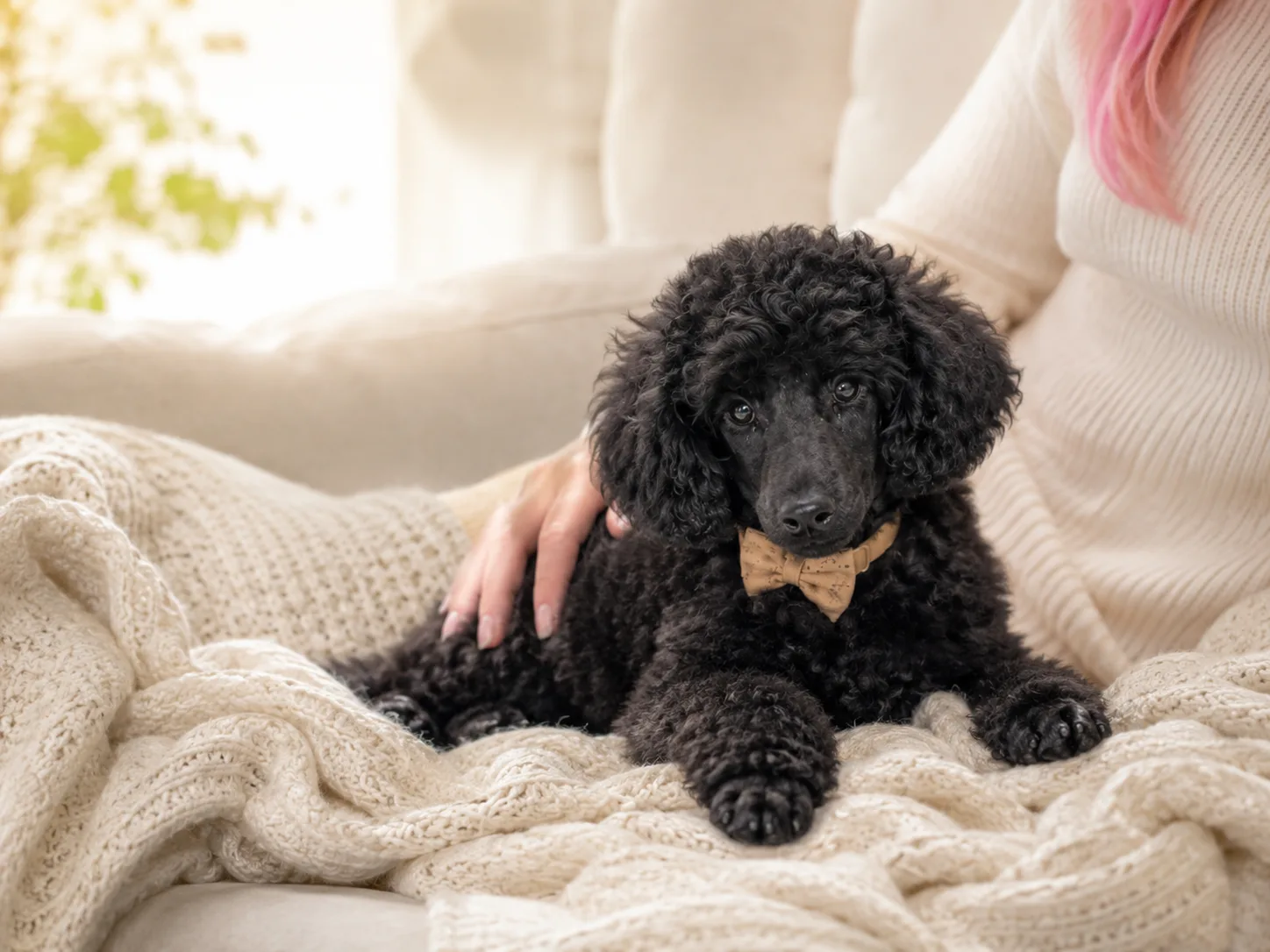
Your puppy’s first week is not a test of how quickly they can learn the entire household. It is a quiet beginning: seven days to help a bright little dog feel safe, notice your rhythm, and discover that you are someone they can trust.
During your Miniature Poodle puppy’s first week at home, keep the world intentionally small. Protect sleep, follow the breeder’s familiar feeding plan, offer frequent potty opportunities, and introduce new experiences one gentle piece at a time. A calm routine will do more for early confidence than a crowded calendar ever could.
The first week at home: the short version
- Begin with one puppy-safe zone instead of opening the entire home.
- Keep food, meal times, and portions consistent with the breeder’s written plan.
- Offer a potty trip after waking, eating, drinking, playing, training, and before sleep.
- Build the day around short awake periods and plenty of protected naps.
- Practice the puppy’s name, gentle handling, and calm crate time in tiny sessions.
- Schedule the first veterinary wellness visit and bring every health record.
- Introduce people, surfaces, sounds, and resident pets gradually and positively.
- Measure success by trust and routine—not by a perfect, accident-free week.
Still getting the house ready? Use our practical guide to prepare your home for a Miniature Poodle puppy before pickup day. A gated puppy zone, a clear potty route, and supplies stored in the right places will make this first week much easier.
Arrival day: make the world smaller
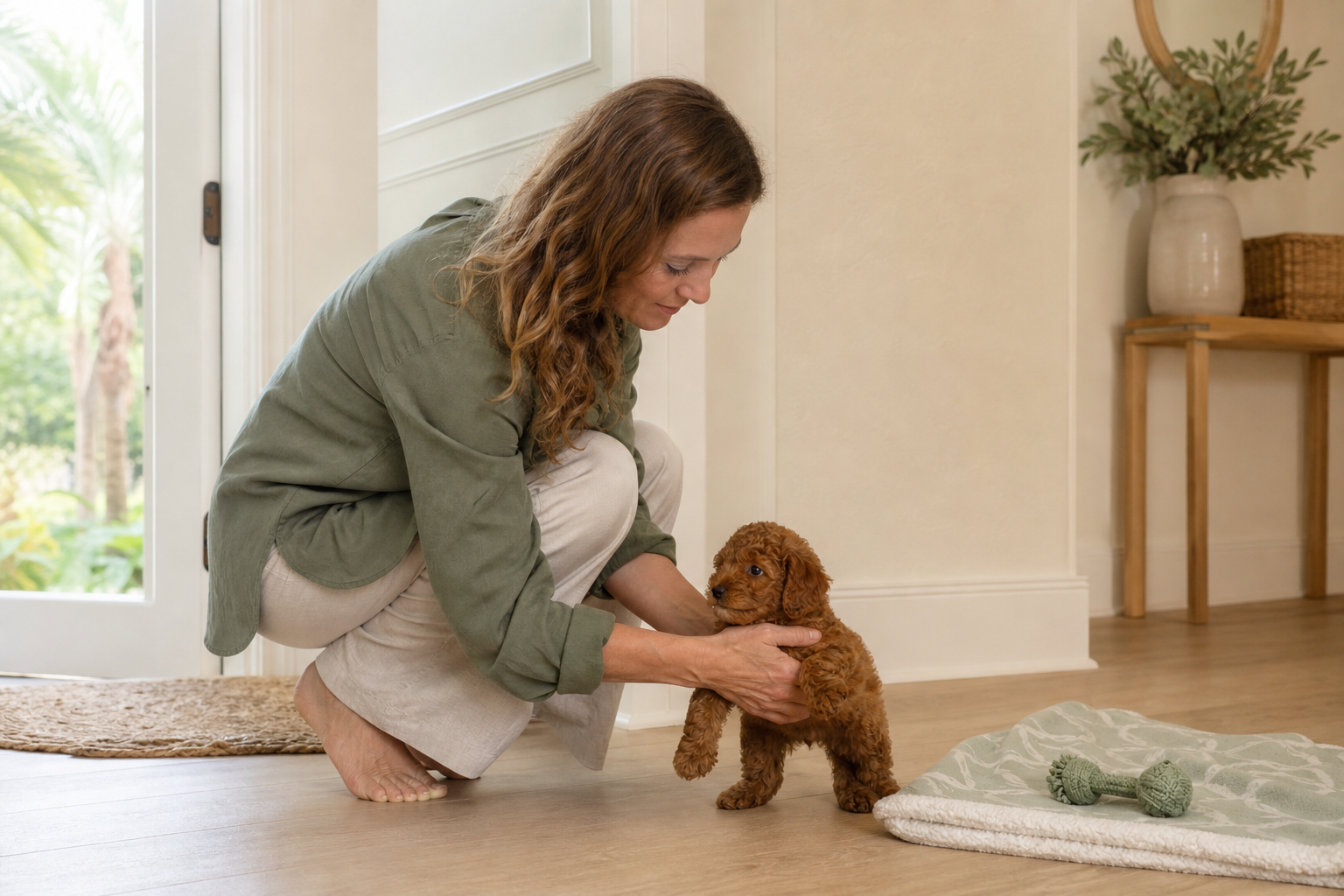
Homecoming is emotionally big even when the drive is short. Your puppy has left familiar people, littermates, scents, sounds, and routines. Give them time to observe before asking them to perform, greet a roomful of relatives, or explore every corner of the house.
- Go to the potty area first. Use the same door, outdoor spot, and simple cue you plan to use all week.
- Introduce the home base. Show the puppy their pen or gated zone, water, resting place, and one or two safe toys.
- Offer quiet connection. Sit nearby, speak softly, and let the puppy approach rather than passing them from person to person.
- Follow the familiar meal plan. Keep the breeder’s food, measured portion, and timing unless your veterinarian directs a change.
- Alternate brief activity with rest. A few minutes of exploration, a potty trip, and a long nap is a perfectly productive first afternoon.
- End predictably. Dim the household energy, take one last quiet potty trip, and settle the puppy near you for the night.
The American Kennel Club recommends introducing a new puppy to the home and family gradually, showing them their sleeping place, crate, potty area, food, and water while keeping close supervision. This is especially helpful for an observant Miniature Poodle who may take in more than they are ready to process all at once.
The first night: close, calm, and boring
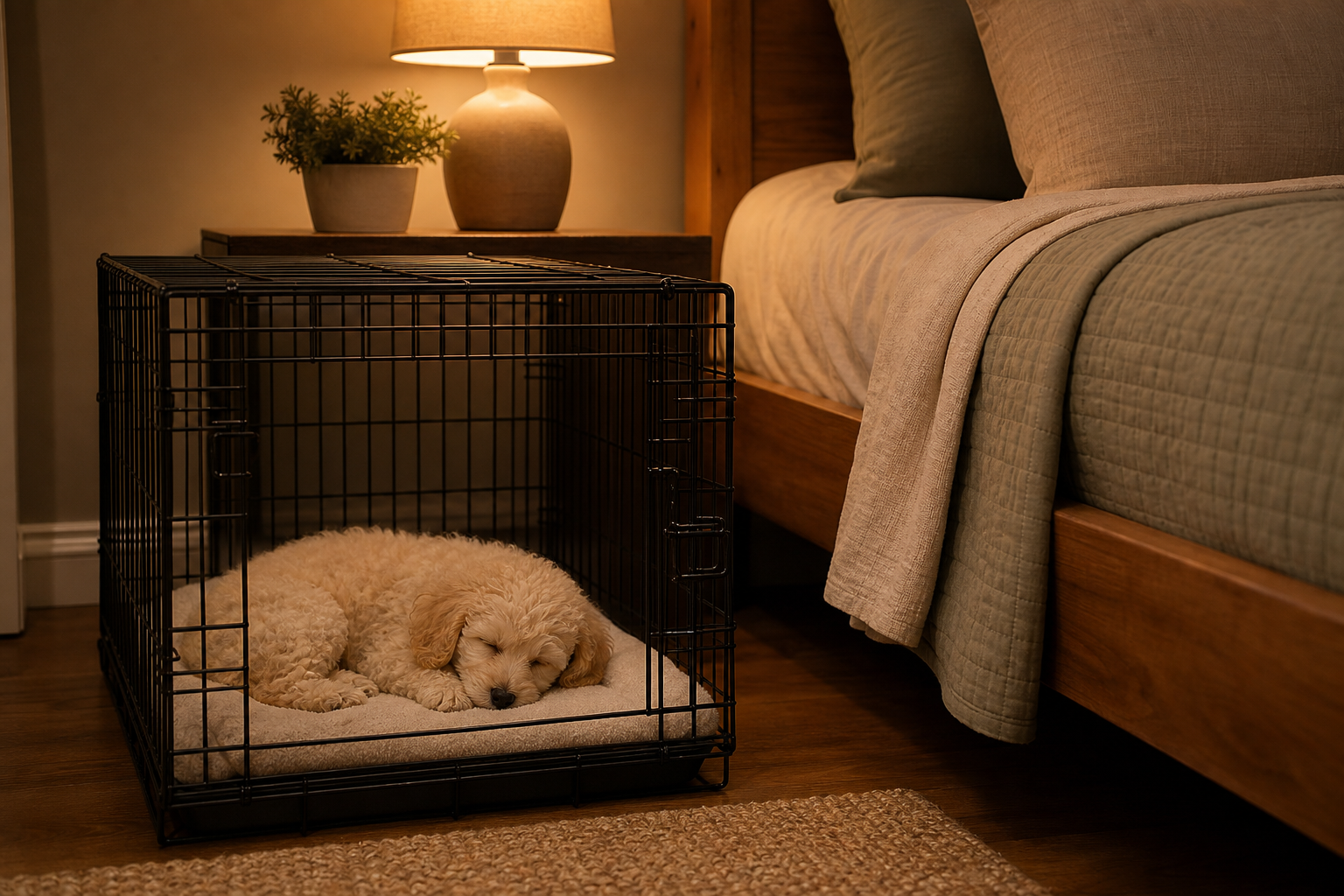
The first night can include whining, wakefulness, or a need to potty. That does not mean the crate is failing or the puppy dislikes the home. They are learning to sleep without the company and sensory cues they have always known.
- Place the crate or secure sleep space near an adult so the puppy is not isolated.
- Use a washable, safe resting surface and remove loose bedding if the puppy tries to shred or swallow it.
- Take the puppy out immediately before bed using a leash and the usual potty route.
- If the puppy wakes and may need to toilet, keep the trip quiet: out, potty, soft praise, and directly back to bed.
- Avoid turning nighttime waking into playtime, a tour of the home, or a snack unless your breeder or veterinarian has given a specific feeding instruction.
AKC guidance on bonding with a new puppy notes that interrupted sleep is normal at first and that a crate or bed near you can help the puppy feel secure. Your goal is not silence at any cost; it is a steady message that nighttime is safe and uneventful.
Build a repeatable daily rhythm
A puppy schedule should feel like a rhythm, not a minute-by-minute military plan. Repeat the same sequence throughout the day so your puppy can begin to predict what happens next:
- Wake and potty before indoor play or wandering.
- Meal or water according to the breeder’s plan.
- Potty again soon after eating or drinking.
- Brief connection through play, exploration, training, or grooming practice.
- One more potty opportunity before containment.
- Protected nap in the crate, pen, or quiet puppy zone.
The AKC’s current puppy-schedule guidance emphasizes consistent feeding, timed potty breaks, short play sessions, and a sleep-friendly environment. It also notes that young puppies may sleep as much as 16 to 18 hours in a day. A puppy who suddenly becomes wild, mouthy, or unable to focus may need a potty trip and a nap more than another game.
Part of daySimple rhythmWhat you are teaching MorningPotty, meal, potty, short play, napThe day starts predictably and the outdoor spot is rewarding. MiddayWake, potty, handling or name game, meal if scheduled, napLearning happens in tiny, successful moments. AfternoonPotty, safe exploration, gentle socialization, restNew experiences are calm and optional, not overwhelming. EveningPotty, family time, quiet chew or toy, wind-downExcitement can be followed by settling. NightFinal potty, sleep space, brief boring potty trips as neededNighttime is secure, dark, and uneventful.Start house-training with observation, not punishment
In the first week, house-training is largely a management job for the humans. Take the puppy out before they have to ask, supervise closely when they are loose, and make success easy to repeat.
Offer a potty trip
- Immediately after waking
- Shortly after meals or a larger drink
- After play, training, or excited greetings
- Before and after crate or pen time
- Before bed and when the puppy wakes at night
Watch for early signals
- Sudden sniffing or circling
- Walking away from play
- Heading toward a previously soiled area
- Restlessness, pacing, or a change in focus
- Moving toward the door or edge of the puppy zone
Use a short cue once, wait quietly, and reward outdoors immediately after the puppy finishes. If an accident happens, interrupt only if you catch the puppy in the act, take them outside without drama, and clean the indoor area thoroughly with an enzymatic product. Scolding after the fact does not explain where the puppy should go and can make toileting in front of people feel unsafe.
Keep a simple log of wake times, meals, water, potty successes, and accidents. Patterns often appear within a few days, giving you a schedule designed for your actual puppy rather than a generic formula.
Keep food familiar and track the basics
The first week already contains a major environmental change. Unless your veterinarian advises otherwise, continue the food and schedule provided by the breeder rather than making an abrupt switch. Measure meals, use only a small portion of the daily food or appropriate treats for training, and keep fresh water available.
Write down what the puppy eats, drinks, and eliminates during the first few days. You do not need a perfect spreadsheet; a note on your phone is enough. This record can help your veterinarian understand what has changed if appetite, stool, or energy becomes concerning.
Keep the breeder packet within reach. It should travel with you to the first wellness visit and include the puppy’s vaccination and deworming history, microchip information when applicable, feeding instructions, and any health records or agreements you received.
Bond through tiny training moments
Miniature Poodles are known for intelligence and strong learning ability. During the first week, use that bright mind gently. The best early lessons are not tricks for an audience; they are small skills that make the puppy feel successful in daily life.
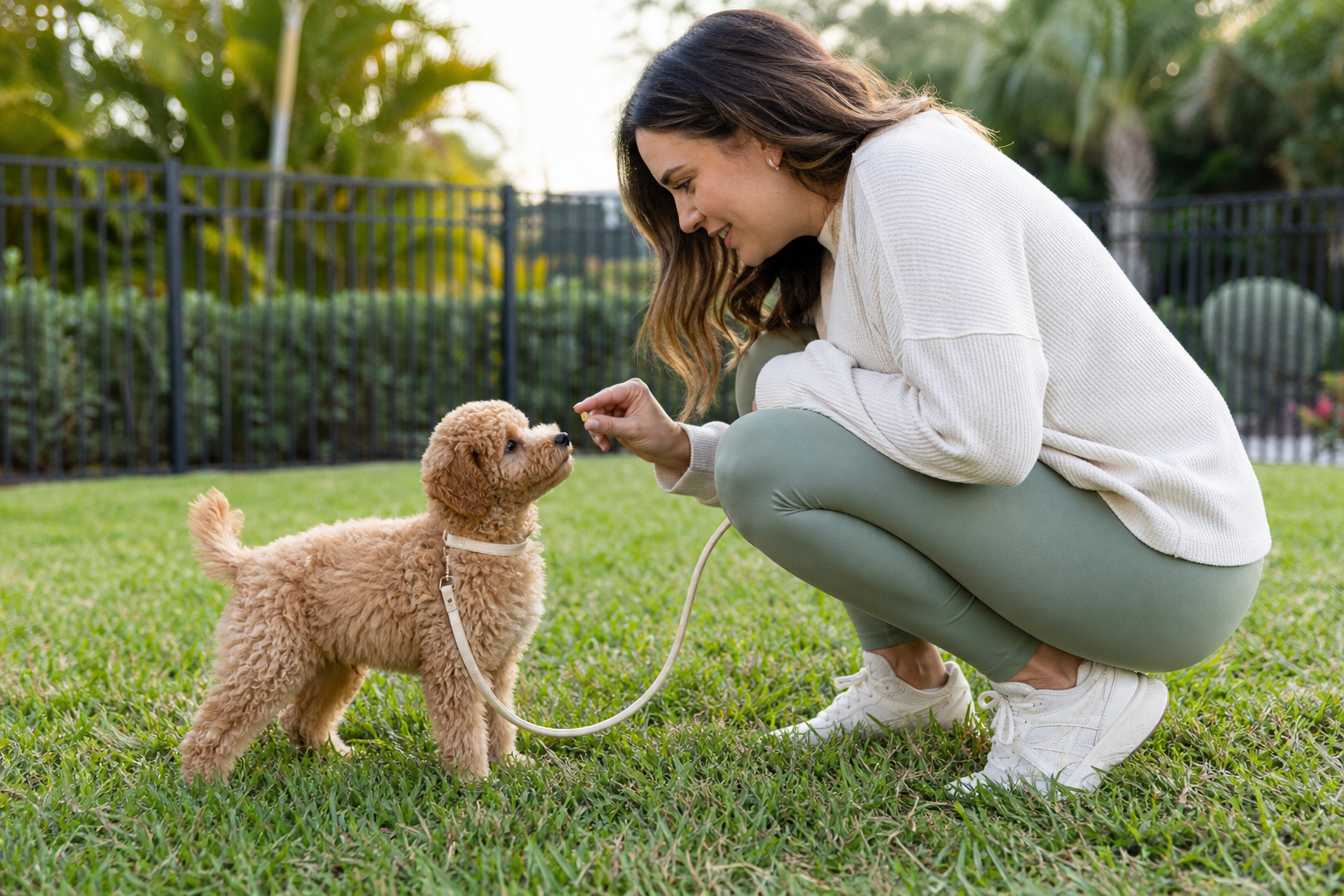
- Name game: say the puppy’s name once; when they look toward you, mark the moment with warm praise and a tiny reward.
- Follow me: take a few cheerful steps away and reward the puppy for coming with you.
- Four paws: reward greetings when the puppy’s feet are on the floor rather than waiting for jumping to become a habit.
- Trade: offer a treat or second toy in exchange for an item instead of chasing or prying the puppy’s mouth open.
- Settle: quietly place a reward between the puppy’s paws when they choose to lie down near you.
- Alone-time seed: while the puppy is calm with a safe toy, step away for a few seconds and return before distress builds.
Stop while the puppy is still engaged. Thirty seconds of clear, happy practice may teach more than a ten-minute session with a tired puppy. Reward what you want to see again, and make sure every adult uses the same cues and household rules.
Socialization should feel safe—not busy
Socialization is not a race to meet the largest number of strangers. It is the careful process of helping a puppy experience people, animals, surfaces, sounds, handling, and environments without being frightened or forced.
The American Veterinary Society of Animal Behavior identifies the first three months as the most important socialization period and recommends positive, reward-based exposure. It also advises avoiding dog parks and other heavily trafficked dog areas with unknown health status. Ask your veterinarian which outings and puppy classes are appropriate for your puppy’s age, health, and local disease risk.
- Let the puppy watch a hat, umbrella, rolling suitcase, or household sound from a comfortable distance.
- Offer treats on a few safe surfaces such as tile, grass, a rubber mat, and a clean patio.
- Introduce one calm visitor rather than hosting a welcome-home party.
- Pair gentle collar touches, being picked up correctly, and brief restraint with rewards.
- If the puppy freezes, hides, refuses food, or tries to escape, create distance and make the experience easier.
Confidence grows when the puppy has choices. Curiosity is welcome; retreat is allowed.
Begin Miniature Poodle grooming confidence on day one
A Poodle’s curly coat requires regular care throughout life, and the first week is the right time to make handling feel ordinary. This is not the week for a long, corrective grooming marathon. It is the week for five-to-thirty-second experiences that end well.
Practice gently
- One or two soft brush strokes
- A comb briefly touching the coat
- Holding a paw for one second
- Lifting an ear flap without cleaning
- Touching the muzzle and chin
- Standing on a stable nonslip surface
Keep it successful
- Use the breeder-recommended tools
- Work when the puppy is calm, not overtired
- Reward after each tiny handling step
- Stop before wiggling becomes a struggle
- Never leave grooming tools within reach
- Ask for help before tangles become mats
The AKC’s Miniature Poodle profile describes the breed as highly trainable and notes the need for consistent coat care. Helen’s professional grooming background shapes Mystic Estate’s early puppy-raising approach, so ask which brush, comb, routine, and first appointment plan are right for your puppy’s current coat.
Introduce children and resident pets with structure
With children
Have children sit quietly and let the puppy approach. Adults should supervise every interaction, demonstrate gentle touch, and end the visit before either child or puppy becomes overexcited. The crate, pen, or bed should be a protected resting place—not a playhouse.
With a resident dog
Begin with calm, managed exposure and enough space for both dogs to move away. Keep bowls, chews, beds, and favorite toys separate at first. Reward relaxed behavior and interrupt play for short breaks before it becomes too intense.
With a resident cat
Give the cat puppy-free escape routes and elevated spaces. Keep the puppy leashed or behind a barrier during early observation, reward calm disengagement, and prevent chasing from becoming a practiced game.
A first meeting does not have to create instant friendship. Peaceful coexistence and the ability to disengage are excellent first-week goals.
Make the first veterinary visit useful
Arrange the puppy’s first wellness appointment according to the timing discussed with your breeder and veterinarian. The American Animal Hospital Association explains that a puppy’s first wellness visit typically includes review of existing health and vaccination records along with discussion of development, socialization, microchipping, nutrition, and preventive care such as parasite and heartworm protection.
Bring:
- Vaccination, deworming, and health records from the breeder
- The exact food name, portion, and meal schedule
- A stool sample if the clinic requests one
- A list of current medications, supplements, or preventives
- Notes about appetite, stool, sleep, coughing, scratching, or other changes
- Your questions about safe socialization, local disease risk, grooming, and the next appointment
Do not improvise vaccination timing or take a young puppy into high-dog-traffic areas while waiting for professional guidance. Your veterinarian can tailor recommendations to the puppy’s records and your local risks.
Know when to call the veterinarian
A quiet first day, a missed meal during travel, or soft stool after stress may or may not be urgent, but young puppies can become dehydrated or weak more quickly than healthy adult dogs. Call your veterinarian when something feels wrong, and use an emergency clinic for urgent signs.
AAHA advises prompt or emergency care for signs such as difficulty breathing, repeated vomiting or severe diarrhea, unresponsiveness or marked mental changes, seizures, significant bleeding or trauma, sudden weakness, abnormal gum color, or a swollen abdomen. Suspected toxin or foreign-object ingestion also warrants immediate professional guidance; do not induce vomiting unless a veterinarian or animal poison expert instructs you to do so.
Before the first night, save the phone numbers and addresses for your regular veterinarian, the nearest 24-hour emergency clinic, and an animal poison-control service. In an emergency, being prepared is kinder than trying to research while frightened.
A realistic seven-day progression
Days 1–2: decompress
- Keep the puppy zone small
- Follow familiar food and sleep routines
- Limit visitors
- Observe appetite, stool, energy, and comfort
Days 3–4: notice patterns
- Refine potty timing from your log
- Add short name and follow-me games
- Practice seconds of gentle grooming
- Introduce one mild sound or surface at a time
Days 5–6: build confidence
- Extend calm crate or pen time gradually
- Practice settling near normal family activity
- Add a carefully planned visitor or pet interaction
- Continue protected naps
Day 7: review, do not test
- Celebrate routines that are becoming familiar
- Adjust what has been too difficult
- Write down questions for breeder or veterinarian
- Plan week two around the puppy in front of you
Progress is rarely a straight line. A puppy may sleep beautifully on night three and wake twice on night four, or use the potty area all morning and have an accident after an exciting visitor. Return to the rhythm: supervise, simplify, reward success, and try again.
First-week questions families often ask
Should family and friends visit during the first week?A few calm, planned visitors can be useful when the puppy is rested and has room to move away. Avoid a welcome-home party. One positive introduction is more valuable than many overwhelming ones.
How much of the house should my puppy explore?Begin with the puppy zone and one nearby room under direct supervision. Expand access gradually as potty habits, chewing choices, and comfort improve. Freedom should follow reliability.
Is crying in the crate normal?Some protest or uncertainty is common during a major transition. Confirm that the puppy has toileted, is comfortable, and is not in distress. Keep the crate near you at first and build positive daytime experiences in very short sessions. Ask your breeder or veterinarian for help if distress is intense or persistent.
When can I change my puppy’s food?Keep the breeder’s familiar plan during the initial transition unless your veterinarian directs otherwise. If a change is needed, ask the veterinarian how and when to make it rather than switching abruptly.
When should grooming training begin?Gentle handling can begin immediately in tiny, positive moments. Touch paws, ears, face, and coat for seconds; reward; then stop. Follow your breeder’s tools and timing for the puppy’s current coat.
Your puppy does not need a perfect week
Your Miniature Poodle puppy’s first week at home should end with something more meaningful than a list of completed lessons: the beginning of trust. If your puppy is learning where to rest, where to potty, how your hands feel, and that your voice predicts safety, the week has been deeply successful.
If you are still preparing for that beginning, explore Mystic Estate’s available and upcoming puppies, read our Miniature Poodle breed guide, or ask Helen your puppy-planning questions. When the match feels right, you can also apply for a Mystic Estate puppy.
Trusted first-week puppy resources
- American Kennel Club: Setting a schedule and routine for a new puppy
- American Kennel Club: Potty training a puppy
- American Kennel Club: Ways to bond with a new puppy
- American Kennel Club: Miniature Poodle breed information
- American Veterinary Society of Animal Behavior: Puppy socialization guidance
- American Animal Hospital Association: Puppy wellness visits
- American Animal Hospital Association: Signs of a pet emergency

From our home to yours.
Meet the puppies behind the stories.
Meet our miniature poodles and tell Helen a little about the home you’re hoping to share.

Hi, I’m
Sterling!