The Mystic Estate journal
What Health Testing Should a Responsible Poodle Breeder Complete?
Mystic Estate · July 18, 2026
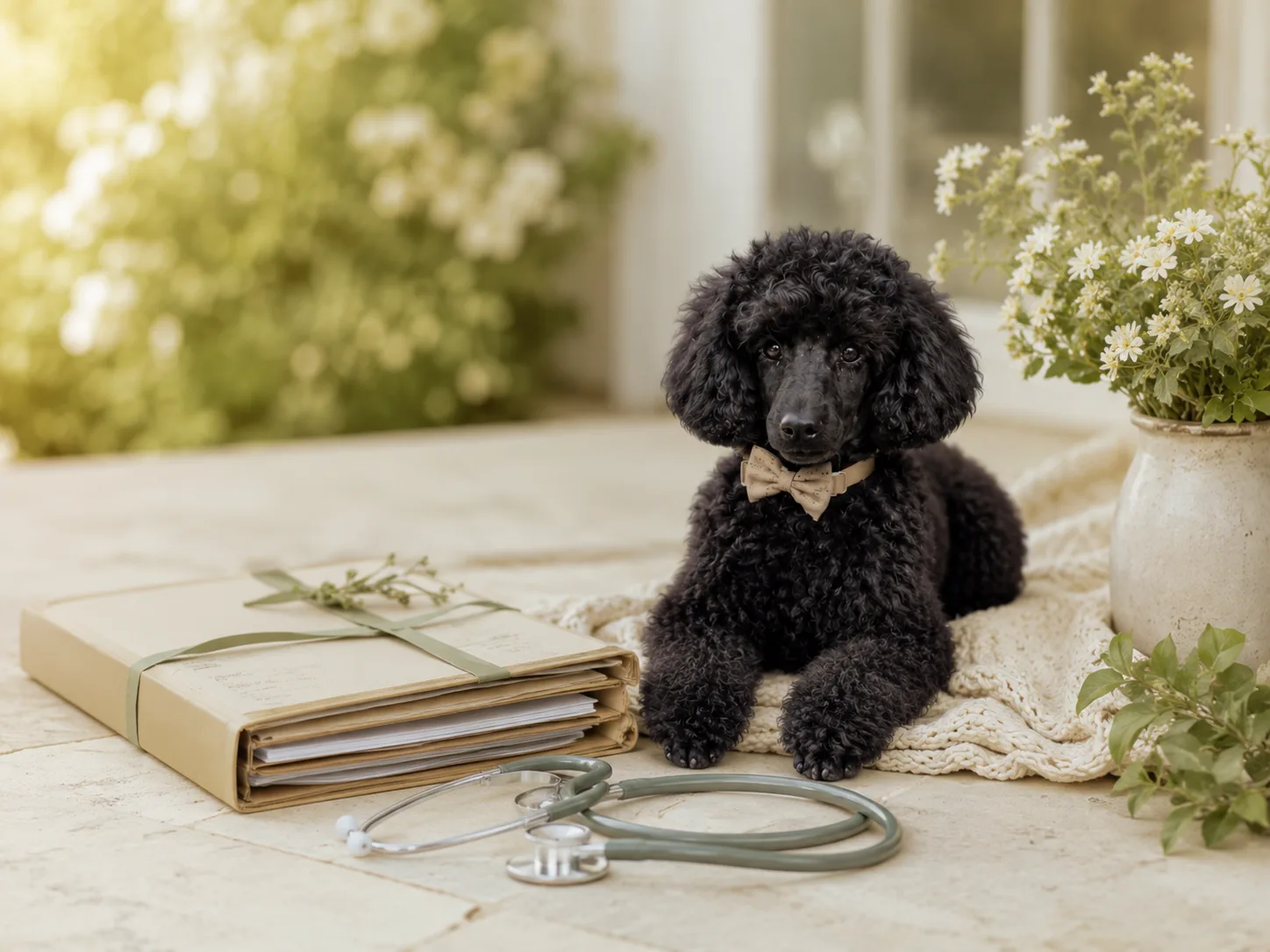
If you are asking what health testing a responsible Poodle breeder should complete, the clearest answer is this: testing should be breed-specific, completed on both the sire and the dam, performed at the right age, and supported by records you can verify. For a Miniature Poodle, the Poodle Club of America currently recommends four core screenings: prcd-PRA DNA testing, an annual eye examination by an ACVO veterinary ophthalmologist, a patella evaluation, and a hip evaluation through OFA radiographs or PennHIP.
That list is short enough to remember, but each result tells a different part of the story. A cheek-swab panel cannot show how a dog's hips are formed. A normal eye exam does not reveal the dog's prcd-PRA genotype. Thoughtful Miniature Poodle health testing brings genetic, orthopedic, and specialist eye information together before a pairing is planned.
The short version: four core tests for both parents
The Poodle Club of America health statement, approved in December 2024, lists these requirements for Miniature Poodles:
- Progressive retinal atrophy, prcd (PRA-prcd): a DNA-based test from an approved laboratory.
- Annual ACVO eye examination: completed by a board-certified veterinary ophthalmologist, beginning at a minimum age of one year.
- Patellar luxation evaluation: a veterinary examination of the kneecaps, beginning at a minimum age of one year.
- Hip dysplasia evaluation: either an OFA radiographic hip evaluation or a PennHIP evaluation.
The same four tests appear in the AKC's Miniature Poodle health-testing recommendations. A breeder may choose additional tests based on a dog's family history or a veterinarian's guidance, but an impressive list of extras should not distract from these core screens.
What “health tested” should mean
“Health tested” should mean more than a routine wellness visit, a verbal promise, or a broad consumer DNA panel. It should mean that the breeder has identified the screening protocol recommended for the breed, tested every dog being considered for breeding, reviewed the results before the mating, and can explain how those results influenced the pairing.
A health test is useful because it informs a decision. The certificate matters, but the breeder's ability to interpret it and choose a compatible mate matters too.
Health screening is not a guarantee that every puppy will remain free of every illness. Dogs are living beings, and not every condition has a predictive test. Testing reduces avoidable risk, makes inherited concerns more visible, and gives breeders and families better information than appearance or good intentions alone.
1. prcd-PRA DNA testing
Progressive retinal atrophy describes inherited retinal diseases that can lead to vision loss. The Miniature Poodle protocol specifically calls for a DNA test for the prcd-PRA variant from an approved laboratory. The result is generally reported as clear or normal, carrier, or affected/at risk.
prcd-PRA follows an autosomal recessive inheritance pattern. That means a carrier has one copy of the variant and is not expected to develop this form of disease from that carrier status alone. A carrier is not automatically an irresponsible breeding dog; the mate's result is essential. As the AKC explains for autosomal recessive conditions, a carrier can be paired carefully with a clear dog so affected puppies are not produced, while genetic diversity is preserved.
When you review a prcd-PRA result, look for:
- The dog's registered name or registration number.
- The laboratory and exact test name.
- The result: clear, carrier, or affected/at risk.
- The result for the planned mate, not only one parent.
- A public OFA entry or the original laboratory report.
A large DNA panel does not replace the other three tests
Modern panels can be useful, and they may screen for additional variants. But a report that says “all clear” is only as complete as the variants included in that panel. It does not examine kneecap stability, assess hip structure, or replace a specialist's eye examination. Ask the breeder to show each required result separately instead of relying on the size of a panel.
2. An annual ACVO eye examination
The PCA calls for an annual eye examination by a diplomate of the American College of Veterinary Ophthalmologists, starting at a minimum age of one year. This is a hands-on specialist examination, not a mail-in DNA test. The ophthalmologist dilates the eyes and uses specialized instruments to look for observable hereditary eye disease.
According to the OFA Companion Animal Eye Registry overview, a normal eye certification is valid for one year. That annual rhythm matters: a dog may have a normal examination when young and develop an observable condition later. Ask for the examination date and confirm that the result was current when the breeding took place.
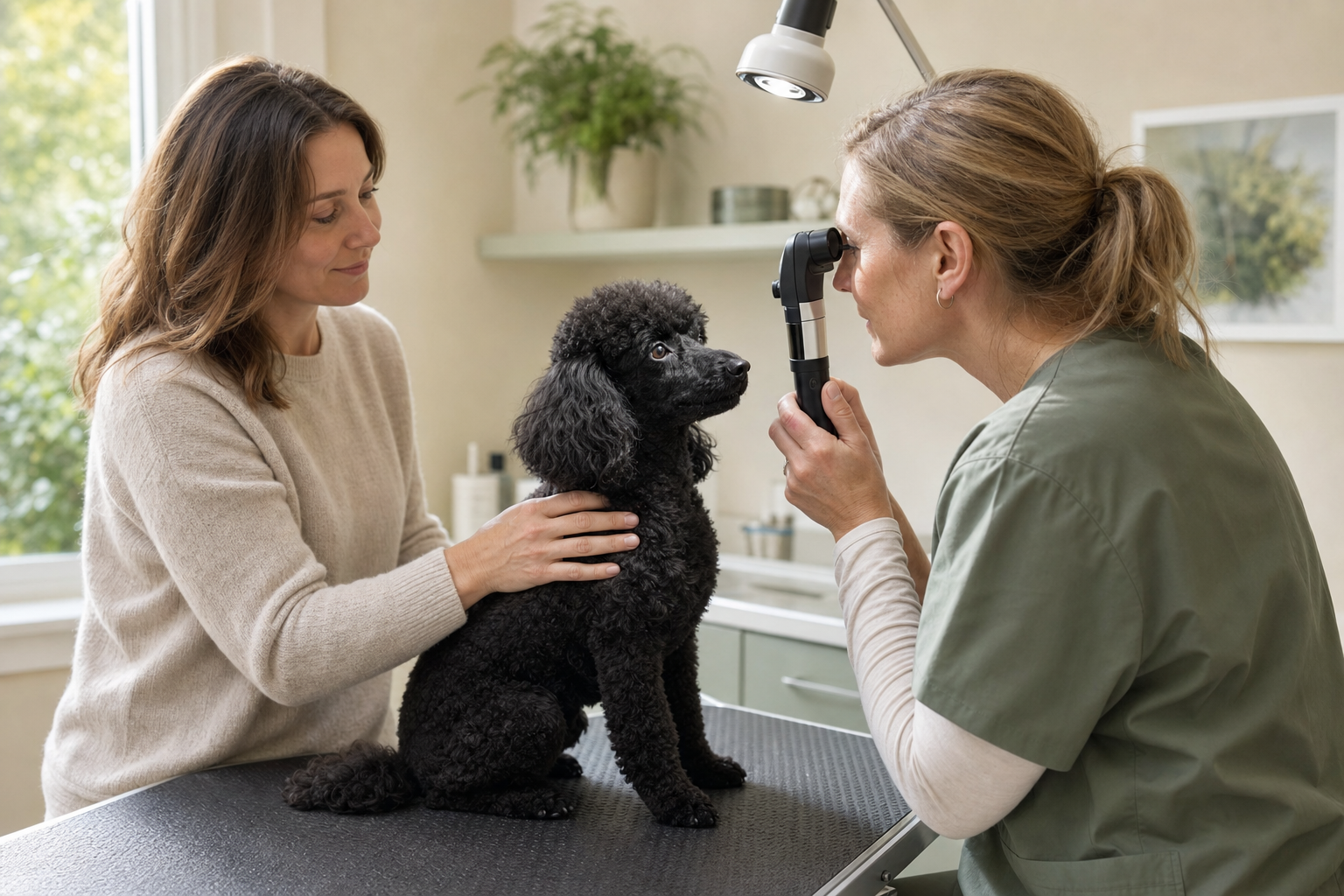
The DNA test and the annual examination are complementary. prcd-PRA testing addresses one known inherited variant; the eye examination can identify other visible ocular findings. A responsible breeder does not choose one and call the eyes “done.”
3. A patella evaluation
The patella is the kneecap. With patellar luxation, it moves out of its normal groove. The PCA recommends a veterinary patella evaluation for Miniature Poodles at a minimum age of one year. During the exam, the veterinarian palpates each knee and records whether the patella remains stable or luxates.
The OFA patellar luxation database is for dogs twelve months and older. OFA notes that the examination is performed with the dog awake and that a certification number is issued for a normal evaluation at the appropriate age. This is a physical orthopedic screen; it cannot be replaced by a DNA panel or by watching a dog move across a room.
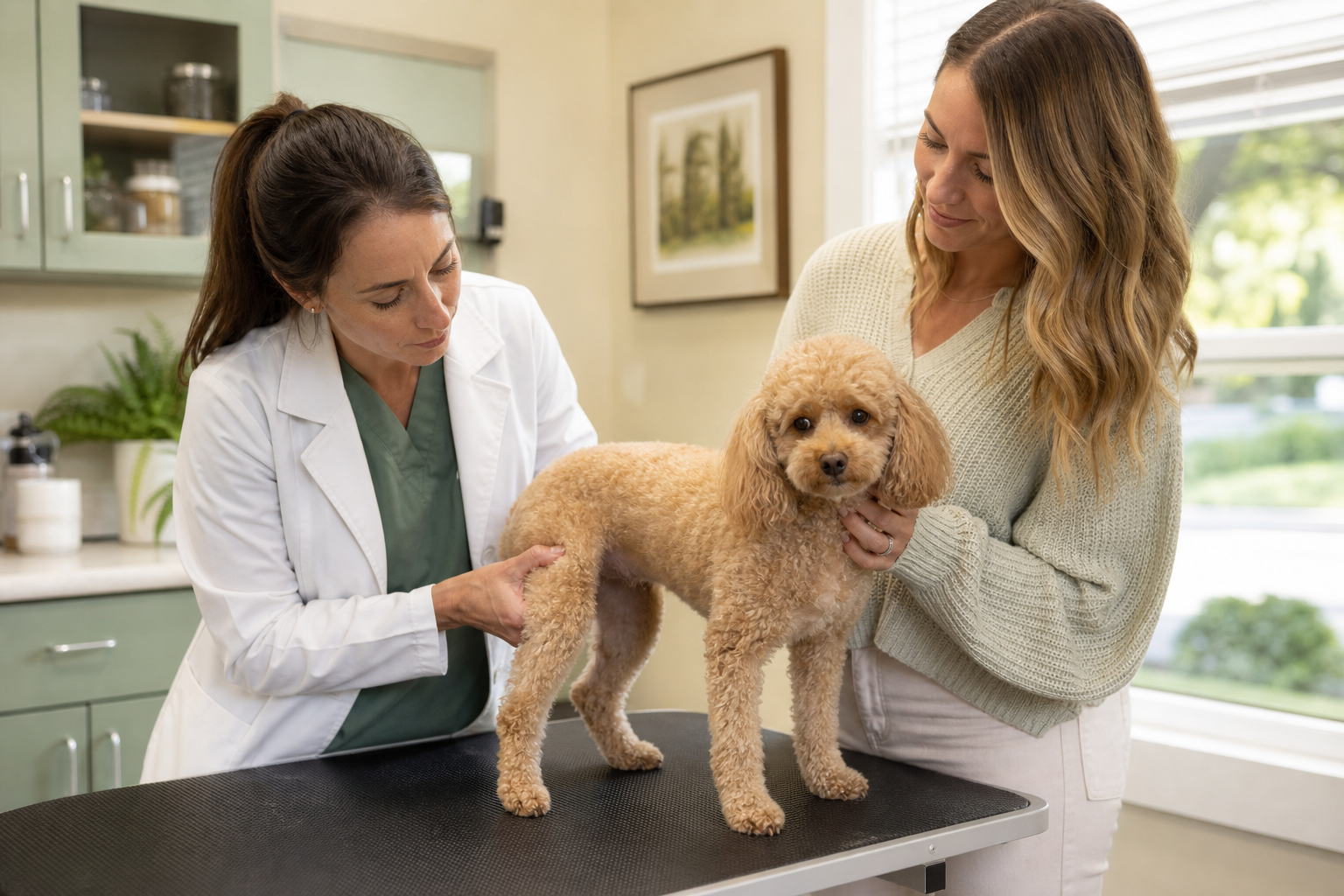
For families, the useful question is not simply “Did your vet check the knees?” Ask whether the result was submitted, at what age the dog was examined, and where you can see the record.
4. A hip evaluation through OFA or PennHIP
Miniature Poodles also need a hip evaluation for hip dysplasia. The current PCA statement accepts either an OFA radiographic hip evaluation or PennHIP. Both paths use carefully positioned radiographs to provide information about hip structure; they are different from a general physical examination.
For an OFA evaluation, a veterinarian takes the radiographs and submits them for review. OFA classifies hips as Excellent, Good, Fair, Borderline, Mild, Moderate, or Severe; Excellent, Good, and Fair are within normal limits. The OFA hip dysplasia resource also notes that preliminary evaluations are available from four through twenty-three months, so families should ask whether an OFA result is preliminary or final. If a breeder uses PennHIP, ask to review the report and hear how it was interpreted for that pairing.
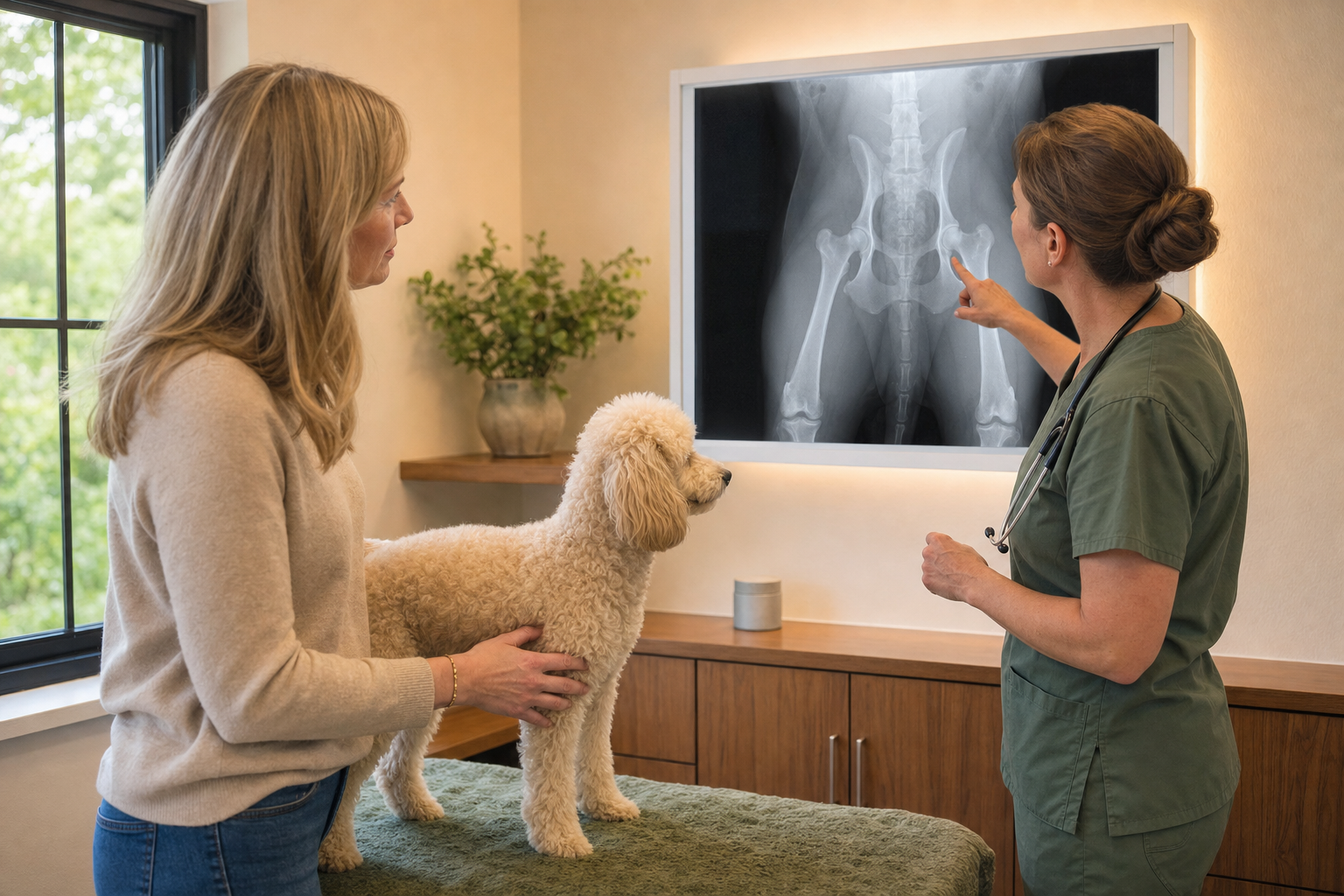
Hip results are one part of a breeding decision, not a crystal ball. A thoughtful breeder considers the individual dog, the proposed mate, relatives and previous offspring when available, and the wider health of the pedigree.
Why all four tests matter
The four screens are not repetitive. They answer different questions:
- prcd-PRA DNA: What genotype does this dog have for one specific inherited retinal variant?
- Annual ACVO eye exam: Does a specialist observe hereditary eye disease at this point in the dog's life?
- Patella evaluation: Do the kneecaps remain in their normal grooves during a hands-on examination?
- Hip evaluation: What do properly obtained radiographs show about hip structure or laxity?
Completing only the convenient swab test leaves important orthopedic and eye information unknown. Completing only the physical exams leaves the prcd-PRA genotype unknown. Responsible Miniature Poodle health testing is a complete, documented set.
What a CHIC number does—and does not—mean
The Orthopedic Foundation for Animals created the Canine Health Information Center, or CHIC, with participating parent clubs. A dog can receive a CHIC number when it has completed every screening required for its breed and the results are publicly available.
There is one important nuance: OFA states that a CHIC number does not mean every result was normal. It means the required testing was performed and disclosed. That transparency is valuable, but buyers should still open the dog's record and read each line rather than stopping at the badge or number.
CHIC requirements can also change as parent clubs update health priorities. A number reflects the protocol in place when it was issued, so current records and an informed conversation remain important.
How families can verify health testing
- Ask for the exact registered names or registration numbers of the sire and dam. Nicknames alone are easy to confuse.
- Search each parent in the OFA records database. Do not search only the kennel name.
- Open each record and match the identity. Check the breed, sex, registration information, and date of birth when shown.
- Read every required result. Confirm prcd-PRA, eyes, patellas, and hips rather than looking only for a CHIC number.
- Check timing. Eye exams should be annual, patella exams should meet the one-year minimum, and an OFA hip result may be preliminary or final.
- Ask for source documents when appropriate. A PennHIP report or a very recent result may need to be shared directly.
- Ask how the two parents fit together. The breeder should be able to explain the pairing calmly and specifically.
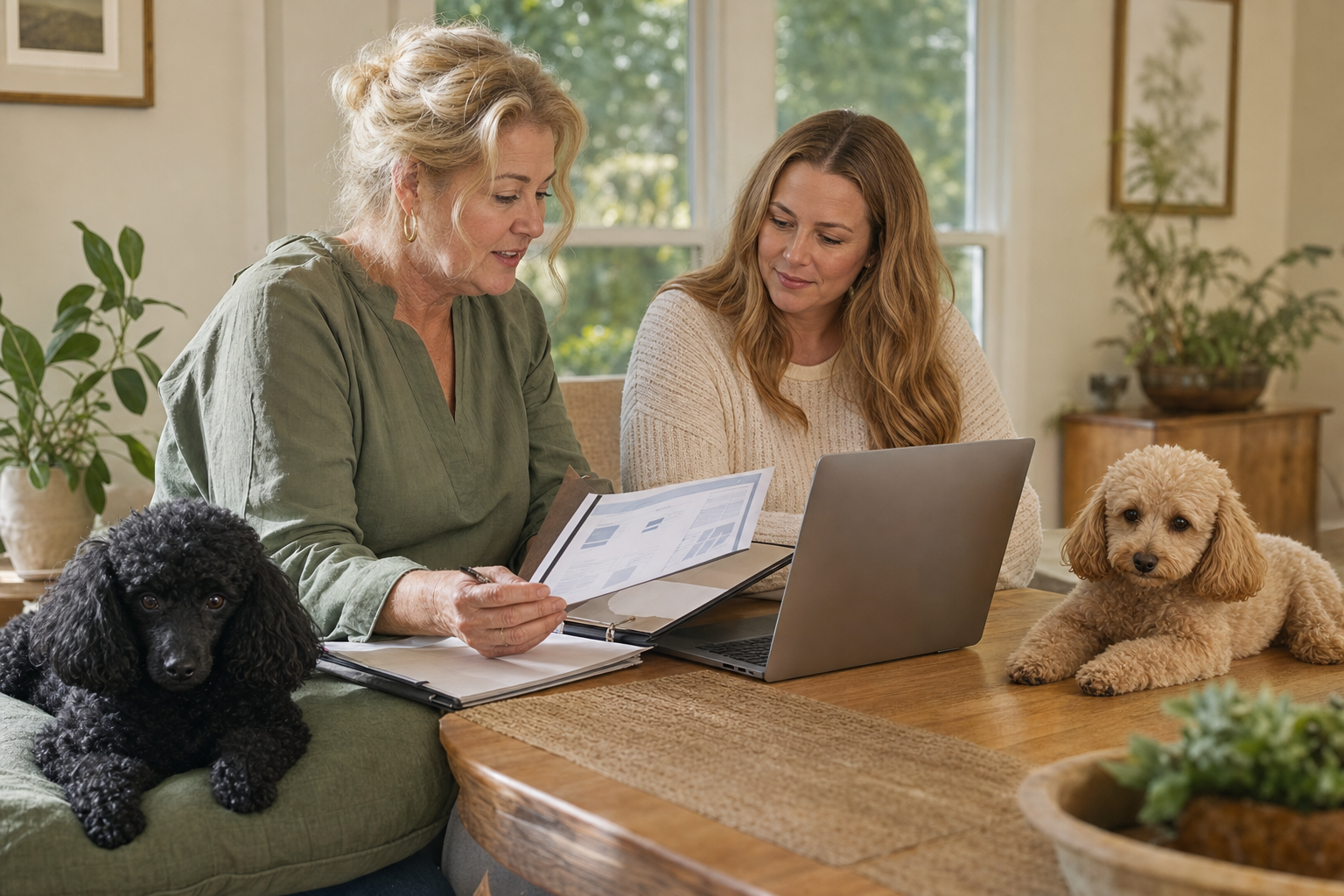
A short delay in a new result appearing online is possible. In that case, ask to see the original certificate and check the public database again. Transparency should feel ordinary, not adversarial.
Health-testing red flags
Pause and ask more questions if you hear any of the following:
- “Our vet says the parents are healthy,” with no breed-specific records.
- “The DNA panel was clear,” but there are no eye, patella, or hip results.
- Only the dam or only the sire is documented.
- The eye examination is old and is presented as a lifetime clearance.
- Screenshots omit the dog's registered identity or the date.
- AKC registration is offered as proof of health testing.
- The breeder cannot explain a carrier result or becomes defensive about the mate's result.
- You are pressured to place a deposit before you can review the parents' information.
No single record proves that a breeder is thoughtful in every part of puppy raising. Health testing belongs beside stable temperament, careful socialization, honest contracts, lifelong support, and a willingness to take responsibility for the dogs a breeder produces.
Questions you can send a breeder
You do not need to sound like a geneticist. A respectful message can be simple:
- What are the registered names of the sire and dam for this litter?
- May I see both parents' prcd-PRA, annual eye, patella, and hip results?
- Are the eye exams current for the breeding date?
- Are the hip results final OFA evaluations, preliminary OFA evaluations, or PennHIP reports?
- If either parent is a carrier for a recessive condition, what is the mate's result?
- Are the records public in OFA, and if not, may I see the original certificates?
- Were any additional tests chosen because of the family history?
A responsible breeder should welcome informed questions. You are not asking for perfection; you are asking for a clear process and the information needed to make a careful decision.
What health testing cannot promise
Even excellent screening cannot guarantee a puppy will never become ill. Some conditions are complex, some appear later in life, and some do not yet have a reliable screening test. The PCA health statement also names other concerns seen in Poodles for which a breeder may consider family history, additional evaluation, or veterinary guidance.
Health testing should therefore be part of a larger conversation. Ask about longevity in the pedigree, temperament, previous litters, causes of death when known, and what support is available if a health concern arises. Good breeders keep learning because responsible breeding is a long practice, not a one-time certificate.
How to take the next step with Mystic Estate
If you are beginning your search, you can meet the dogs on our Miniature Poodle parents page, see planned litters, and review our Florida Miniature Poodle puppies. When a pairing interests you, contact Mystic Estate and ask us to walk through the available health information with you.
Families who feel ready for the next conversation can also complete our puppy application. We want the process to feel thoughtful, unhurried, and clear on both sides.
Frequently asked questions
Is a DNA panel enough health testing for a Miniature Poodle?
No. DNA testing for prcd-PRA is one core requirement, but it does not replace the annual ACVO eye examination, patella evaluation, or hip evaluation. Those screens assess findings a cheek swab cannot measure.
Should both the sire and the dam be tested?
Yes. A responsible breeding decision depends on the results of both parents. Seeing complete records for only one dog leaves half of the pairing unexplained.
Does a carrier result mean the dog is unhealthy?
Not necessarily. For an autosomal recessive condition such as prcd-PRA, a carrier has one copy of the variant and is not expected to be affected by that carrier status. The critical question is whether the mate tested clear so the pairing will not produce affected puppies.
Does a CHIC number guarantee a healthy puppy?
No. A CHIC number shows that the breed-specific required tests were completed and made public. OFA is explicit that the number itself does not mean every result was normal, and no screening program can guarantee future health.
How recent should the parents' eye examinations be?
The PCA recommends annual ACVO eye examinations for Miniature Poodles beginning at one year of age, and OFA eye certifications are valid for one year. Check that each parent's exam was current when the breeding occurred.
A simple standard for a careful decision
Miniature Poodle health testing should be complete, current, understandable, and verifiable. Look for prcd-PRA DNA results, annual ACVO eye examinations, patella evaluations, and hip evaluations for both parents. Then read the individual results and ask how they shaped the pairing.
The best conversations are not about claiming a risk-free puppy. They are about showing the work, sharing what is known, acknowledging what cannot be promised, and making each breeding decision with care.

From our home to yours.
Meet the puppies behind the stories.
Meet our miniature poodles and tell Helen a little about the home you’re hoping to share.

Hi, I’m
Sterling!