The Mystic Estate journal
Miniature Poodle Colors: What Future Owners Should Understand
Mystic Estate · July 20, 2026
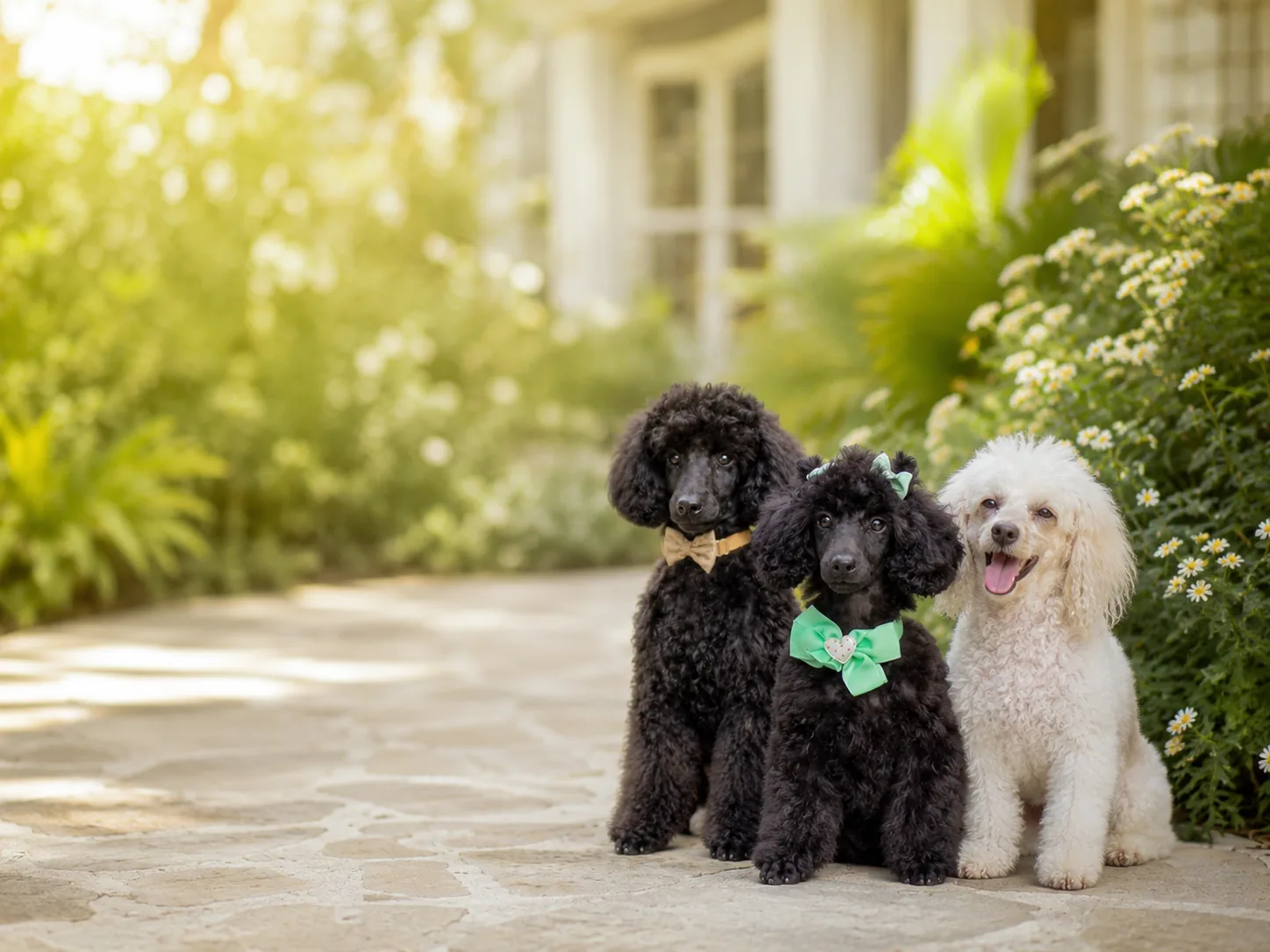
Miniature Poodle colors are one of the first things families notice—and one of the easiest details to overthink. Black, brown, red, apricot, cream, white, blue, silver, gray, café-au-lait, and silver beige can all be beautiful. What matters most is understanding that a puppy’s first shade is not always the exact shade you will see in adulthood, and color should never outrank health, temperament, or a thoughtful family match.
A responsible breeder can explain the color seen today, what is known about the puppy’s family, and how the coat may mature without promising a paint-chip-perfect outcome. This guide will help you read color descriptions more clearly, ask useful questions, and keep appearance in its proper place when choosing a Miniature Poodle.
The short version: what future owners should know
- Poodles come in many recognized solid colors. The official standard includes black, white, brown, blue, gray, silver, café-au-lait, silver beige, cream, apricot, and red.
- A puppy’s coat can change. Adult coat development, inherited pigment, coat length, grooming, light, and normal shading can all affect how the color appears.
- Color names are useful descriptions, not guarantees. Ask what the breeder sees at the skin and roots and what happened in older relatives.
- Registration and conformation rules are not the same thing. The AKC records additional color combinations, while the official Poodle standard calls for an even, solid coat at the skin.
- Color does not choose the right puppy for your home. Health testing, stable temperament, ethical raising, and individual compatibility deserve priority.
What colors are recognized in Miniature Poodles?
The American Kennel Club’s Poodle breed page identifies eleven breed-standard colors: apricot, black, blue, brown, cream, red, silver, silver beige, white, café-au-lait, and gray. The same color standard applies across the Standard, Miniature, and Toy varieties; their principal show-ring difference is height.
Those names describe broad families of pigment. Two apricot Poodles may not be identical, and a silver coat can look different in shade, length, and lighting from another silver coat. The Poodle Club of America’s official standard expressly allows varying shades of the same color in blues, grays, silvers, browns, café-au-laits, apricots, and creams. Darker ear feathering or tipping can be normal rather than a defect.

Why the same color can look different from dog to dog
Coat color is not created by one simple “color gene.” The UC Davis Veterinary Genetics Laboratory explains that canine hair begins with two pigment types: eumelanin, which is the basis of black pigment, and phaeomelanin, which is the basis of red or yellow pigment. Multiple genes influence which pigment is produced, where it appears, and how strongly it is expressed. Other modifiers can turn black pigment brown or dilute it toward blue.
That is why labels alone cannot capture every nuance. A rich red and a pale cream both sit within the red-to-yellow pigment family, while black, blue, brown, silver, and related shades involve the dark-pigment pathway and its modifiers. Genetics also interacts with age and coat development, so responsible color conversations use probabilities and family history—not absolute promises.
Will a Miniature Poodle puppy keep the same color?
Sometimes the adult coat stays close to the puppy shade; sometimes it becomes noticeably lighter or changes in tone. The AKC’s guidance on puppy-to-adult coat development notes that a puppy’s soft first coat gives way to an adult coat and that some dogs develop a different color during that transition.
Among Poodles, families often hear the words clearing or fading for gradual lightening. A very dark puppy may mature into a softer blue, silver, or café-au-lait appearance, and reds or apricots may remain rich or soften with time. The rate and final shade vary. Even a knowledgeable breeder cannot guarantee precisely how a living coat will look years later.
For the most useful estimate, ask to see:
- The puppy in indirect natural daylight rather than under warm indoor bulbs.
- The coat parted to the roots in several areas.
- Current photographs of the sire and dam.
- Photos of older full or half siblings at puppy, adolescent, and adult ages.
- Honest notes about which relatives held color and which lightened.

Solid color, natural shading, and parti patterns
This is an area where online listings can become confusing. The official AKC Poodle standard says the coat should be an even, solid color at the skin. It also says natural variation within the same color may occur. A slightly deeper ear or ruff is therefore different from a coat made up of clearly separate colors.
The AKC breed page also provides registration codes for a number of two-color combinations. Registration terminology and show-ring eligibility are separate questions: the official standard disqualifies parti-colored Poodles from AKC conformation. That rule describes competition under a particular standard; it is not a judgment about whether an individual companion dog can be loved, trained, or well cared for.
If showing or breeding is part of your goal, tell the breeder before choosing a puppy and ask for a precise explanation of the dog’s recorded color, pedigree, and eligibility. If you want a family companion, keep the distinction in perspective and devote most of your questions to health, temperament, socialization, and lifelong support.
How to evaluate a puppy’s color in a useful way
A single phone photograph is a poor color measurement. Cameras alter white balance, screens display tones differently, and direct sun can make a coat look warmer or lighter. A fresh clip exposes different lengths and newer growth; a longer coat catches light differently and may show sun exposure at the tips.
When color genuinely matters to you, look at the whole dog in natural light:
- Check the roots. Part the coat gently at the neck, shoulders, and body to compare new growth with the tips.
- Notice the skin and points. Nose, lip, eye-rim, and toenail pigment are part of the Poodle standard and help a breeder describe the color accurately.
- Expect reasonable variation. Ears, ruff, and areas of longer coat may appear deeper than the clipped body.
- Ask for dates on photographs. A puppy at eight weeks, six months, and two years may look quite different.
- Separate preference from requirement. Decide whether color is a flexible wish or a reason you are willing to wait for another litter.
Does color predict temperament?
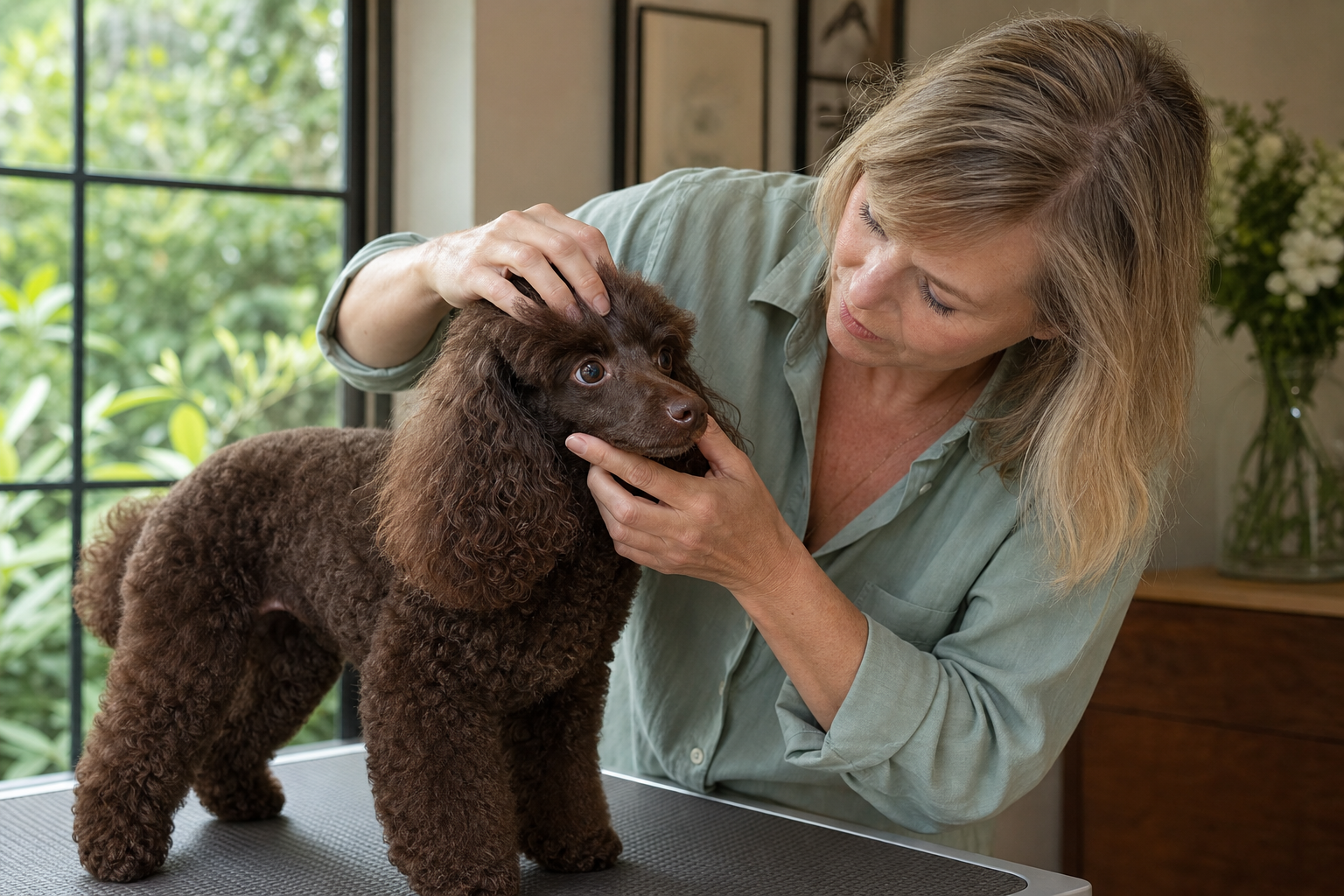
Color is not a reliable shortcut to personality. The Poodle standard describes the breed as proud, active, intelligent, and distinctive without assigning different temperaments to different colors. Within any shade, puppies can vary in human focus, confidence, persistence, energy, recovery, play style, and ease of settling.
A family choosing between a red puppy and a black puppy will learn more by asking how each one responds to novelty, handles grooming, seeks people, plays with littermates, and relaxes after activity. Our guide to choosing a male or female Miniature Poodle reaches the same practical conclusion: one visible trait should not replace observation of the individual.
Choose the puppy whose needs fit the life you can truly provide. A beautiful color cannot make a very busy puppy comfortable in a quiet, low-activity home, and it cannot make a sensitive puppy enjoy a schedule full of unpredictable noise. Compatibility is kinder than collecting a preferred look.
Does color change the grooming commitment?
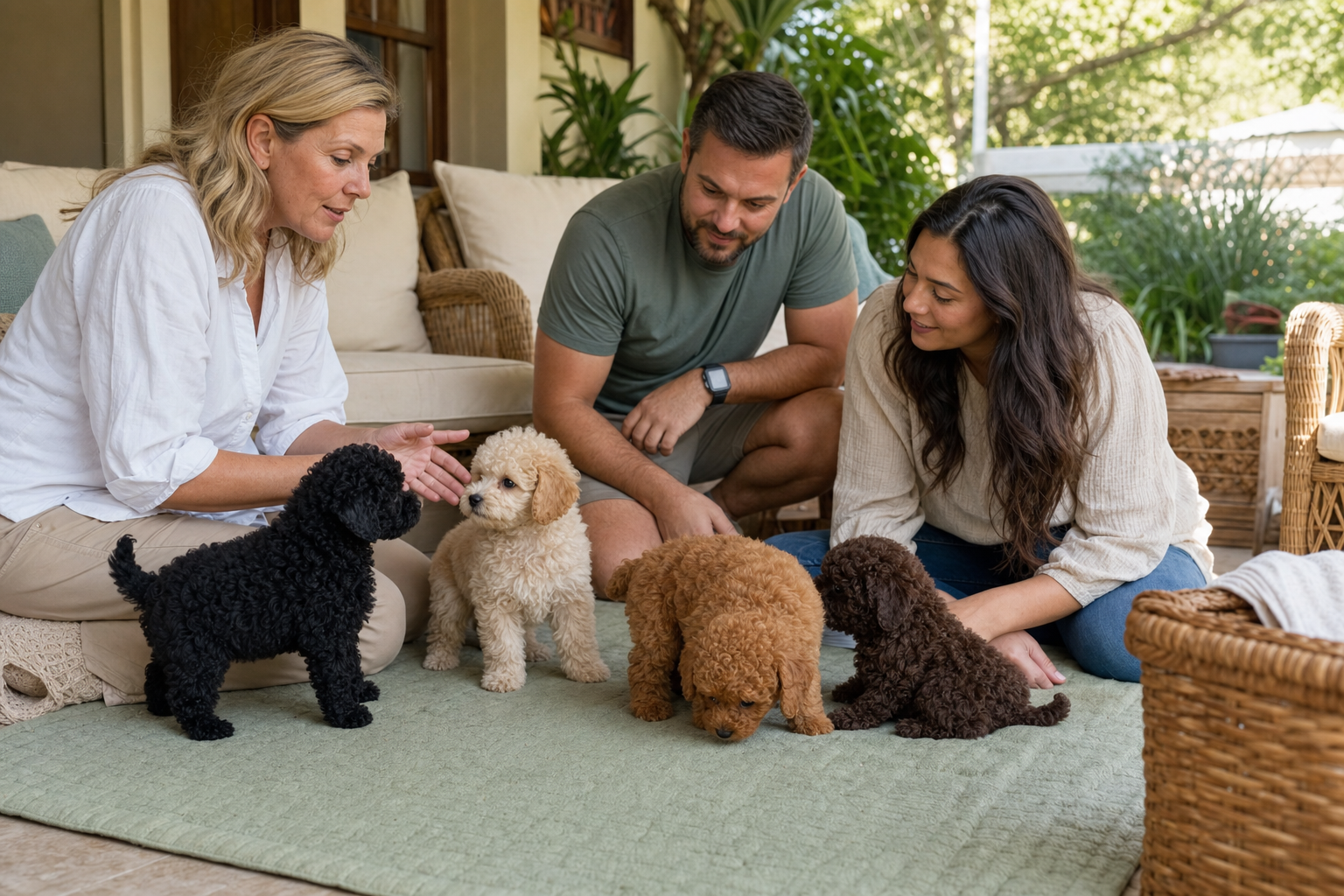
Every Miniature Poodle color grows the same continuously growing, curly coat that requires regular care. Light coats may show mud or tear staining more readily, while dark coats can make flakes, pale debris, or a missed nail tip easier to notice. Those are visibility differences, not different grooming requirements.
All colors need brushing and combing to the skin, timely bathing and clipping, nail care, ear attention, dental care, and gentle practice with handling. Our complete Miniature Poodle grooming guide gives new owners a realistic home and professional-care routine.
Call your veterinarian when a color change comes with hair loss, inflamed skin, odor, sores, unusual texture, or significant itching. Normal coat maturation should not be used to explain away signs that the skin or hair is unhealthy.
Health testing matters more than coat color
The health-screening priorities published by the Poodle Club of America are based on the Miniature Poodle variety, not on a preferred color. The current core recommendations include a DNA test for prcd-PRA, an annual examination by a board-certified veterinary ophthalmologist, a patella evaluation, and a hip evaluation through OFA or PennHIP.
Ask for the registered names of the sire and dam and verify results rather than accepting the word “tested.” The Orthopedic Foundation for Animals’ CHIC program explains that a CHIC number means the required screenings were completed and made public; it does not, by itself, mean every result was normal. Our step-by-step article on Miniature Poodle health testing shows what to look for in each record.
A preferred coat can be part of the wish list. Transparent health records, sound temperament, careful raising, and lifelong breeder support belong on the must-have list.
Questions to ask a breeder about Miniature Poodle colors
- What color is this puppy registered as, and what do you expect the adult shade may be?
- What changes have you seen in the parents, siblings, and previous related litters?
- Can I see unfiltered photographs in natural light at several ages?
- Is the coat an even solid color at the skin, or is there a distinct pattern?
- How do you distinguish normal shading from a separate marking?
- Are you making a reasonable estimate or guaranteeing an exact adult color?
- What temperament traits have you observed in this individual puppy?
- Where can I verify the sire’s and dam’s health-testing results?
- How do you decide which puppy fits each family when several colors are available?
Color-related red flags
Pause when a seller:
- Uses “rare” color language to avoid discussing health testing or pedigree.
- Charges attention toward appearance while providing little information about temperament and raising.
- Guarantees an exact adult shade despite normal coat development.
- Cannot explain the difference between registration color and the official breed standard.
- Relies on heavily filtered photos or refuses to show the puppy in natural light.
- Claims one color is automatically calmer, smarter, healthier, or more affectionate.
- Will not provide verifiable results for both parents.
How to make color part of a thoughtful match
It is completely reasonable to love a particular color. Tell the breeder whether that preference is firm or flexible. A family might say, “We hope for apricot or red, but temperament fit matters more,” or “We are prepared to wait for a black puppy with the right qualities.” Honest priorities help everyone make a better decision.
You can meet the dogs who shape our program on the Mystic Estate parent-dogs page, review planned Miniature Poodle litters, and see our available puppies in Florida. These pages show the beauty of individual dogs, while a personal conversation lets us learn what daily life in your home will require.
If you are ready to share your color preferences and the traits your family needs, complete the Mystic Estate puppy application or contact us. We would rather help you wait for a genuinely suitable puppy than rush a decision based on one photograph.
Frequently asked questions
What are the official Miniature Poodle colors?
The AKC lists apricot, black, blue, brown, cream, red, silver, silver beige, white, café-au-lait, and gray as breed-standard Poodle colors. The official conformation standard calls for an even, solid color at the skin while allowing natural variation in shade within several colors.
Do red and apricot Miniature Poodles fade?
Some remain rich, while others soften as the adult coat develops. Family history can help a breeder make an educated estimate, but an exact future shade cannot be guaranteed. Compare natural-light photographs of parents and older relatives at several ages.
Are silver and blue Poodles born lighter?
Some puppies that mature to a lighter gray-family shade begin with a much darker coat. The timing and degree of change vary, so ask what the breeder sees at the roots and what occurred in closely related adult dogs.
Is a parti Poodle a recognized show color?
The AKC records several two-color combinations, but the official Poodle standard requires an even solid color at the skin and disqualifies parti-colored dogs from AKC conformation. Registration terminology and conformation eligibility should not be treated as the same question.
Is one Miniature Poodle color healthier than another?
Color alone is not a substitute for health evidence. Evaluate both parents using the Miniature Poodle screenings recommended by the Poodle Club of America, review the actual results, and ask about the health of close relatives.
Which Miniature Poodle color is easiest to maintain?
Every color requires the same fundamental coat-care schedule. Light and dark coats may reveal different kinds of dirt or debris more readily, but none eliminates brushing, combing, clipping, bathing, nail care, ear care, or dental care.
Choose the dog, then enjoy the color
Miniature Poodle colors bring wonderful variety to an already remarkable breed. Learn the proper names, expect honest uncertainty as the adult coat develops, and enjoy the details that make each dog visually unique.
Then look deeper. A well-matched Miniature Poodle is chosen through health, temperament, upbringing, and the breeder’s knowledge of both puppy and family. The coat may be the first thing you see; the relationship you build is what you will live with and love.
From our home to yours.
Meet the puppies behind the stories.
Meet our miniature poodles and tell Helen a little about the home you’re hoping to share.

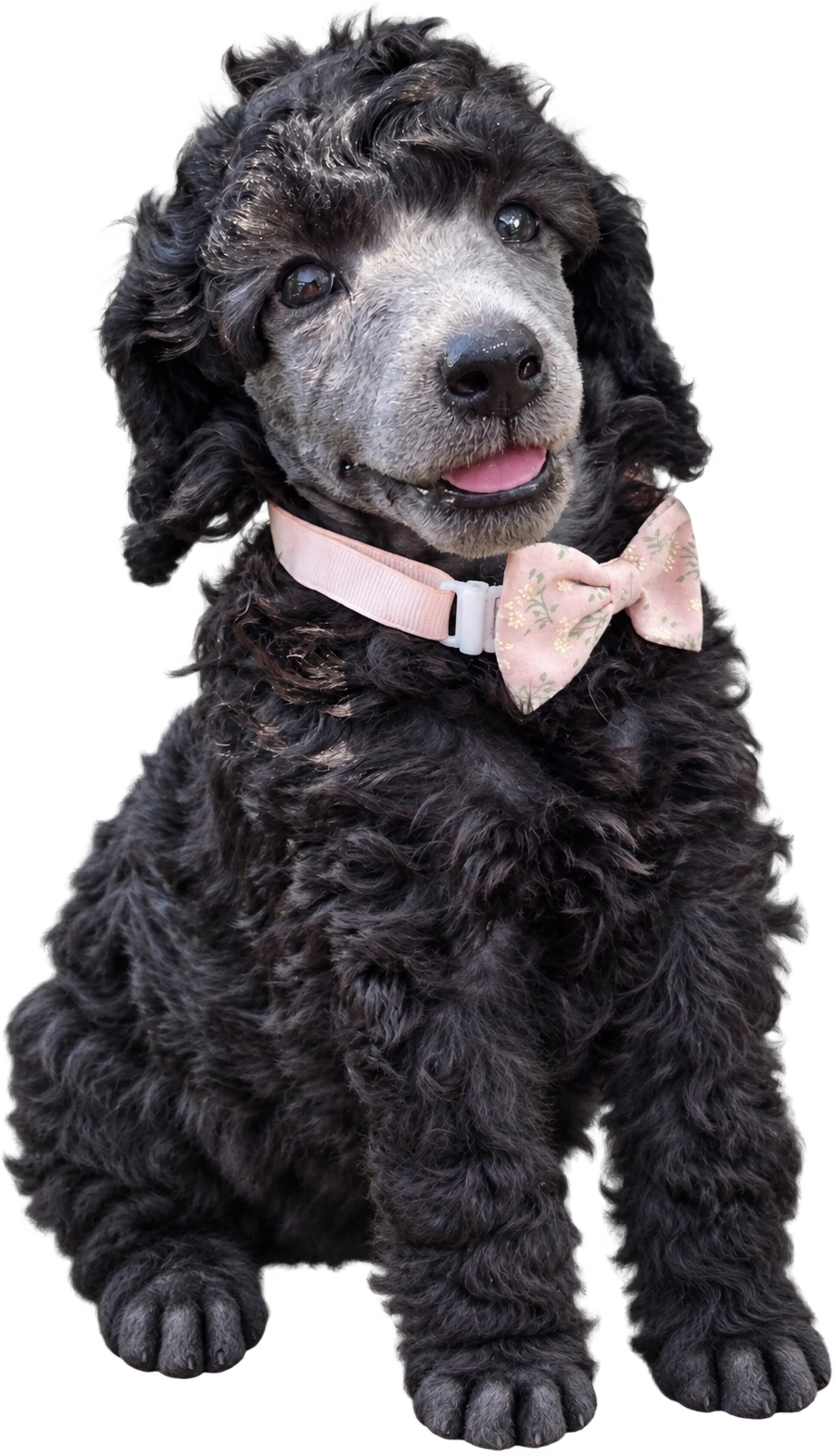
Hi, I’m
Sterling!