The Mystic Estate journal
The Miniature Poodle Grooming Guide for New Owners
Mystic Estate · July 17, 2026
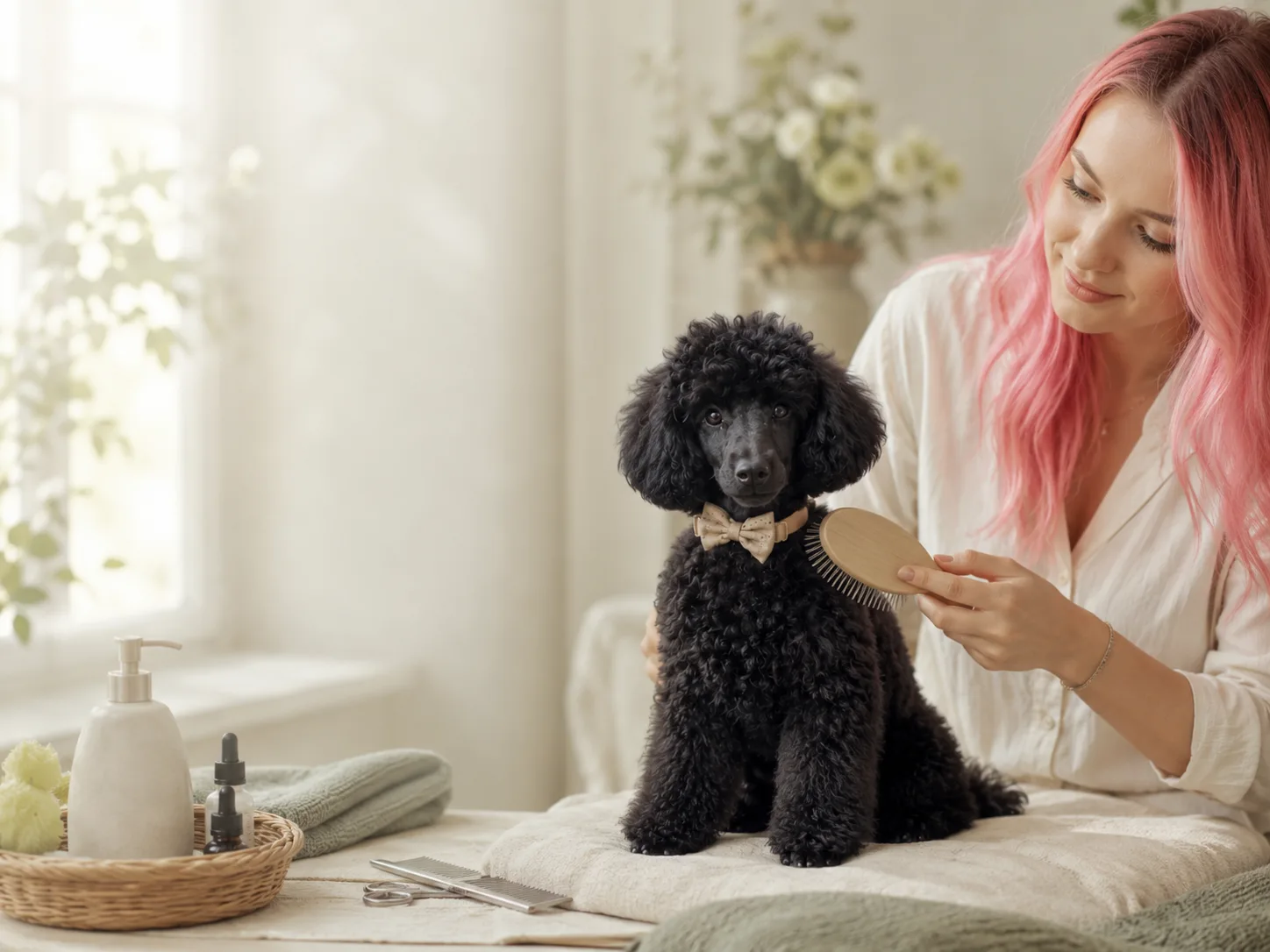
A freshly groomed Miniature Poodle may look effortlessly elegant, but the comfort behind that beautiful coat comes from a simple, repeatable routine. Curly hair can hide tangles close to the skin, especially behind the ears, under a collar or harness, in the armpits, and around the legs. The goal is not a perfect show finish. It is a clean, comfortable dog who feels safe being handled.
This Miniature Poodle grooming guide gives new owners a realistic plan for brushing, bathing, professional appointments, nails, ears, teeth, and puppy grooming practice. Use it as a starting point, then adjust with your groomer and veterinarian for your dog’s coat length, skin, health, and lifestyle.
Miniature Poodle grooming guide: the short version
The most important habit is consistency. Brush and comb a longer coat thoroughly to the skin every day or two, keep a short pet trim on a regular professional schedule, and practice calm handling between appointments. A few gentle minutes now are kinder than trying to remove weeks of tangles later.
- At home: Check high-friction areas daily and give the whole coat a careful brush-and-comb session several times a week; long coats may need daily attention.
- At the groomer: Many pet Poodles do well on a four-to-six-week bath and trim cycle, adjusted for coat length and lifestyle.
- Before every bath: Find and loosen tangles first. Water can tighten a mat and make it harder to remove.
- Every week: Look at the nails, ears, skin, paw pads, and areas beneath the collar or harness.
- Every day when possible: Brush the teeth with pet toothpaste. The American Animal Hospital Association identifies daily brushing as the best way to reduce plaque buildup.
- For puppies: Keep practice short, reward cooperation generously, and stop while the puppy is still successful.
Why a Miniature Poodle coat needs regular care
The American Kennel Club describes the Poodle coat as curly and relatively low-shedding. Low shedding, however, does not mean low maintenance. Loose hair can stay caught within the curls, where it combines with friction and moisture to form tangles. If those tangles tighten at the roots, they can pull on the skin and become painful.
The AKC Miniature Poodle profile advises thorough brushing for a full coat and notes that many pet owners choose a shorter trim with professional grooming every four to six weeks. A short trim is wonderfully practical, but it still needs brushing, bathing, nail care, and regular attention to the ears, teeth, and skin.
Grooming is also a useful health check. While your hands move through the coat, you may notice a new bump, redness, a sore spot, a tick, broken skin, or an area your dog suddenly does not want touched. That does not make grooming a substitute for veterinary care; it makes grooming an opportunity to notice change early.
A realistic grooming schedule
Daily or every other day
- Run your fingers through the coat and check behind the ears, beneath the collar or harness, the armpits, groin, ankles, and tail base.
- Brush and comb a long or fluffy coat in small sections. For a short pet trim, focus on any area that feels less smooth than it did the day before.
- Wipe damp feet after outdoor time and remove leaves, seeds, sand, or other debris.
- Brush the teeth with a soft pet toothbrush and toothpaste made for dogs.
Once a week
- Complete a nose-to-tail comb check, even if the coat looks tidy on top.
- Inspect the nails and paw pads.
- Look at the outer ear and notice any redness, odor, discharge, tenderness, head shaking, or repeated scratching.
- Wash the collar or harness as needed and make sure it is not rubbing damp or tangled hair.
About every four to six weeks
- Schedule a professional bath, blow-dry, haircut, face and foot tidy, and nail service if you are not doing those jobs confidently at home.
- Ask the groomer whether the interval still suits your chosen length. A longer style, a coat change, frequent swimming, or a very active outdoor life may call for more frequent visits.
This is a framework, not a rulebook. Coat texture, length, age, skin health, activity, and tolerance all matter. Your groomer can help you choose the least complicated routine that keeps your individual dog comfortable.
Build a simple home grooming kit
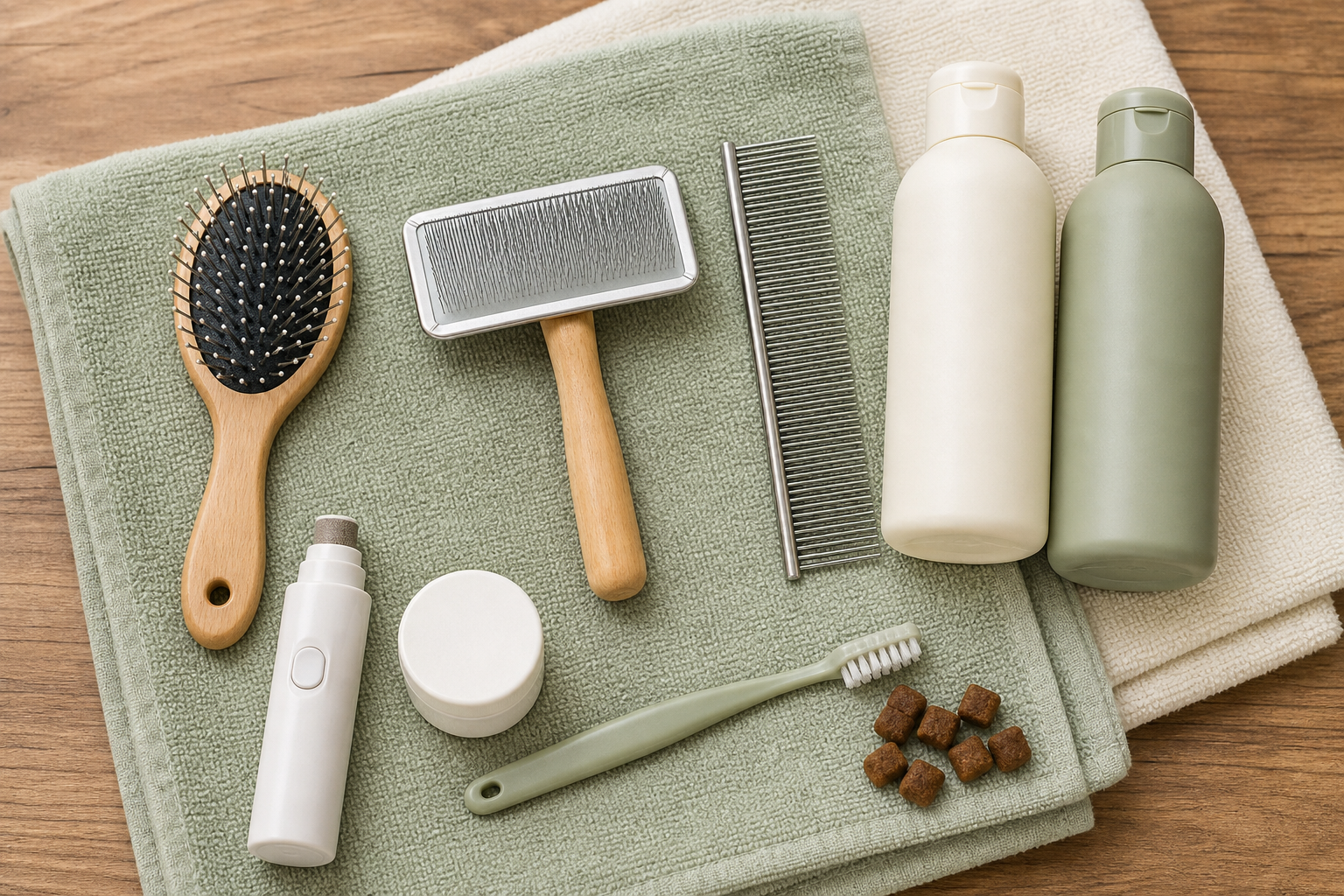
You do not need a salon full of equipment. Start with reliable basics and learn how each tool feels on your own forearm before using it on a puppy.
- A pin brush or gentle slicker brush: Choose a size you can control. Pins should move through the hair without scraping the skin.
- A stainless-steel comb: A comb is your truth test. If it cannot pass from the ends to the skin, the section is not finished.
- A dog-safe detangling spray: A light mist can reduce static and breakage. Follow the product directions and avoid the eyes and mouth.
- A nonslip surface: A rubber-backed mat helps your dog feel secure. Never leave a dog unattended on a raised table.
- Dog shampoo and conditioner: Choose products made for canine skin unless your veterinarian recommends something specific.
- Absorbent towels and a dryer with a cool or low-heat setting: Drying while gently brushing helps separate curls and reveal hidden tangles.
- Dog nail clippers or a grinder: Use the tool you can handle steadily, with styptic powder nearby.
- A soft pet toothbrush and dog toothpaste: Human toothpaste is not appropriate for pets.
- Small, high-value treats: Payment matters. Your dog should learn that calm handling predicts something pleasant.
How to brush a Miniature Poodle all the way to the skin
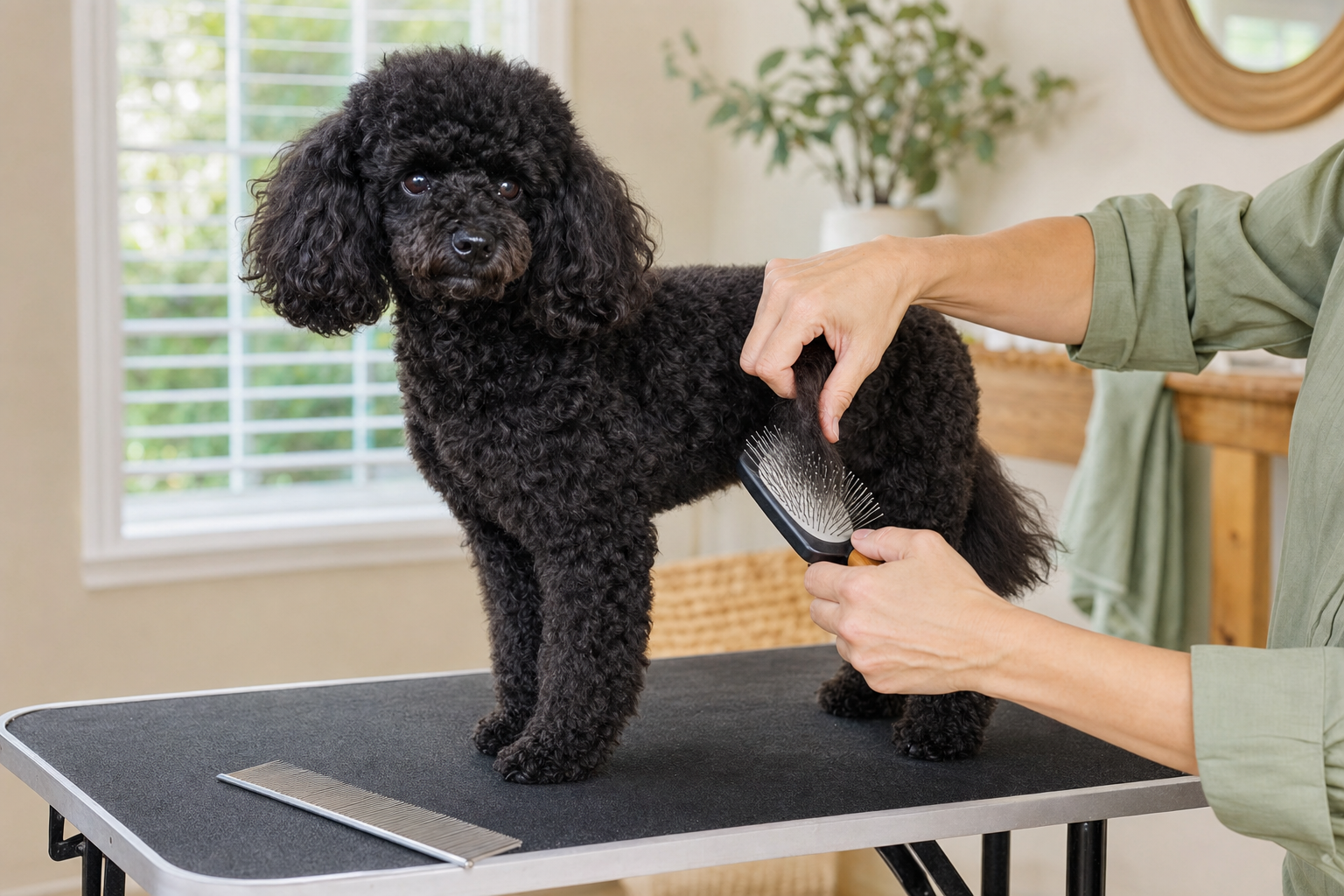
Brushing only the surface can leave a felted layer underneath. Instead, work in narrow sections so you can see or feel where each small line of hair begins at the skin.
- Set up for safety. Choose a quiet room and a nonslip mat. Have every tool within reach so you never need to leave your dog unattended.
- Start where your dog is comfortable. The shoulder or side is often easier than the face, feet, or tail. Use one hand to support the skin and coat without pulling.
- Separate a small line of hair. Lift the coat, then brush the exposed section from the ends toward the roots in short, gentle strokes. Do not rake hard across the skin.
- Follow with the comb. The comb should pass through the same section from tip to skin without catching. If it stops, return to the edge of the tangle rather than forcing through it.
- Move methodically. Continue one small section at a time over the body and legs. Pay special attention to friction points behind the ears, under the collar, in the armpits, between the front legs, around the ankles, and at the tail base.
- Keep the session fair. Offer breaks, reward often, and end before patience runs out. A complete groom can be divided into several short sessions for a young puppy.
If a mat is tight, close to the skin, covers a large area, or makes your dog uncomfortable, call a professional groomer. Dog skin can be pulled up inside a mat, which makes cutting at it with household scissors dangerous. A shorter haircut is kinder than a prolonged, painful detangling session.
Bathing without creating tighter tangles
A bath should leave the coat clean and comfortable—not wet around an existing mat. The Poodle Club of America’s puppy guidance recommends brushing the coat thoroughly before bathing and making early grooming a positive experience.
- Brush and comb first. Remove ordinary tangles before the coat gets wet.
- Use lukewarm water and dog shampoo. Protect the eyes and avoid directing water into the ear canals.
- Rinse patiently. Residue can irritate the skin, so keep rinsing after the coat first feels clean.
- Blot instead of rubbing. Vigorous towel rubbing can twist curls together.
- Dry in sections. Use cool or low heat at a comfortable distance while brushing gently. Never use heat that feels hot on your own skin.
- Comb-check the dry coat. Damp areas beneath the ears, collar, armpits, or harness can tangle quickly.
How often to bathe depends on the dog. A four-to-six-week professional cycle works well for many pets, while mud, swimming, skin treatment, or a longer coat may change the plan. If your dog has itching, recurring odor, dandruff, or inflamed skin, ask your veterinarian before changing products or bathing more often.
Choose a practical pet trim
A Miniature Poodle does not need a show-ring silhouette to look polished. Most families are happiest with a shorter, balanced pet trim that fits the dog’s routine. You might ask for a tidy body, manageable leg length, a rounded head, and a clean face or fuller face according to your preference.
When discussing length with your groomer, be honest about how often you can brush. A longer coat is beautiful when maintained; a shorter coat is comfortable and attractive when life is busy. The kind choice is the style you can care for consistently.
Bring a photograph of the finish you like, but expect your groomer to adapt it to your dog’s current coat, texture, condition, and comfort. If matting requires a shorter cut than planned, remember that hair grows back. Protecting the skin matters more than preserving length.
Make grooming easy for a puppy to trust
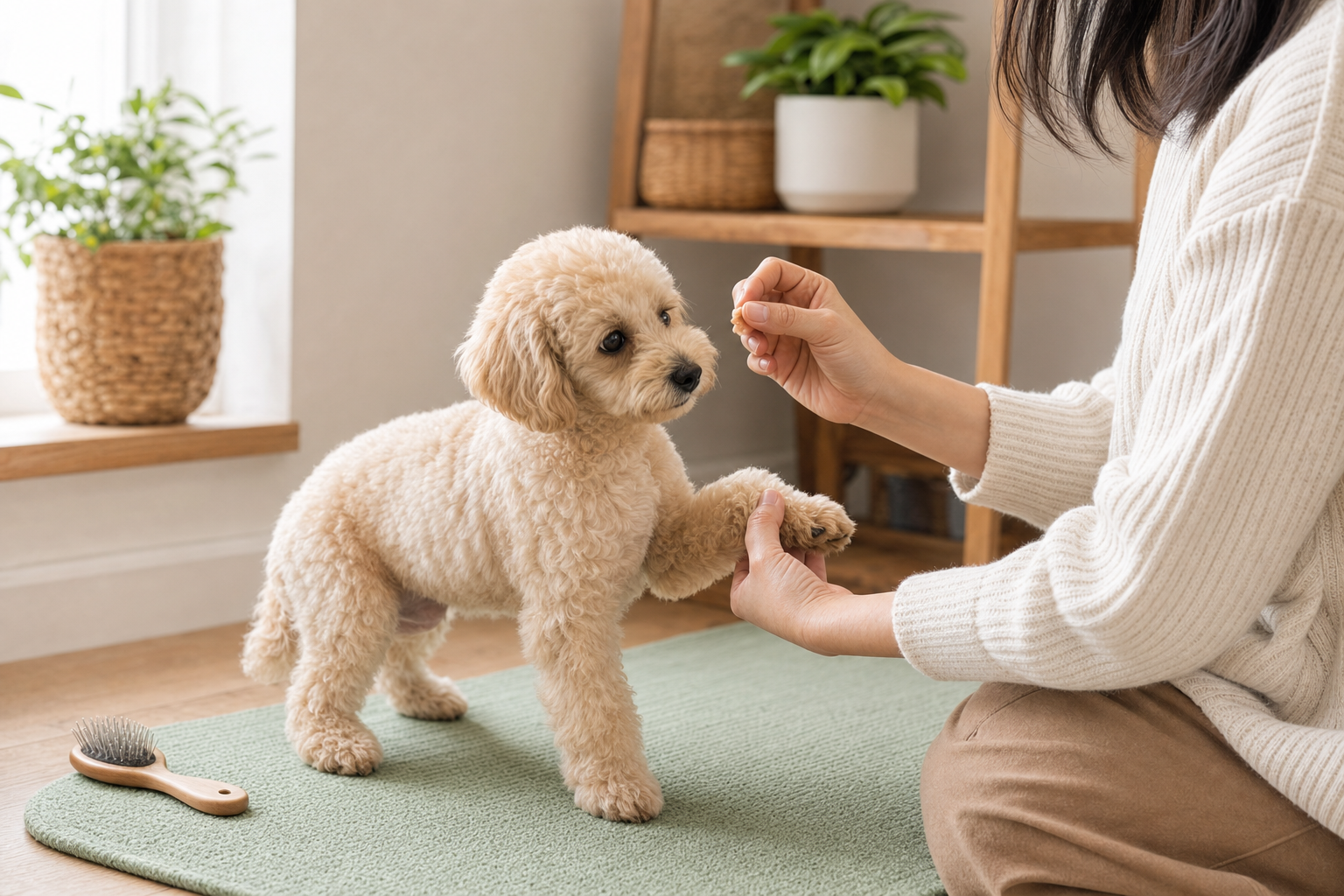
Grooming cooperation is a life skill, and it begins long before a full haircut. The Poodle Club of America encourages owners to make grooming enjoyable and use treats while a puppy learns to lie or stand quietly. Early practice should feel small and predictable.
A one-minute puppy practice
- Place the puppy on a nonslip mat.
- Touch one shoulder, lift one ear flap, briefly hold one paw, and stroke the brush once over the body.
- Give a treat after each easy step.
- Release the puppy before wiggling becomes a struggle.
Over time, add the comb, handling between the toes, gentle chin support, the sound of a dryer from far away, and a quiet electric clipper sound without immediately touching the puppy. Progress only while your puppy can eat, respond, and recover comfortably. Restraint battles teach fear; tiny successful repetitions teach trust.
If you are preparing for the first days together, our guide to a Miniature Poodle puppy’s first week at home includes a gentle starting routine. You can also review how to prepare your home for a Miniature Poodle puppy before arrival.
Nails, ears, and teeth belong in the grooming plan
Nails
Long nails can change how a dog places the feet and can snag or split. A clicking sound on hard flooring is a useful clue that it is time to check them, but growth rate varies. Trim only a small amount at a time and avoid the quick, the blood and nerve supply inside the nail. Dark nails can make the quick difficult to see, so ask your groomer or veterinary team to demonstrate before working alone.
If you accidentally nick a nail, apply styptic powder and calm pressure. Contact a veterinarian if bleeding does not stop promptly or if the nail is torn, split deeply, or painful.
Ears
Look at the outer ear weekly and after swimming or bathing. A healthy routine is observation, not aggressive cleaning. Do not place cotton swabs deep in the canal, and do not automatically pluck ear hair without an individual recommendation from your veterinarian or experienced groomer. Ear anatomy, hair, skin sensitivity, and infection history differ from dog to dog.
Redness, strong odor, discharge, swelling, persistent scratching, head shaking, or pain deserves veterinary attention. Repeated home cleaning can mask symptoms without treating the cause.
Teeth
Dental care is not cosmetic. The American Animal Hospital Association’s dental guidance recommends daily brushing with a soft pet toothbrush and pet toothpaste as the best home method for reducing plaque accumulation. Never use human toothpaste. Ask your veterinarian about Veterinary Oral Health Council-accepted products if brushing is not yet possible.
Schedule a veterinary dental exam if you notice bad breath, red or bleeding gums, drooling, discolored teeth, facial swelling, difficulty eating, or food dropping from the mouth. A groomer can notice changes, but diagnosis and treatment belong with the veterinary team.
Florida grooming details that make a difference
Warmth, humidity, rain, swimming, and sandy outings can make a comfortable coat tangle faster. After wet-weather walks or pool time, rinse away residue when needed, blot the coat, dry friction areas, and comb beneath the collar or harness. Check between the toes for sand, plant material, and irritation.
A very short summer trim can be practical, but grooming is not a substitute for heat safety. Plan walks for cooler hours, offer shade and water, and follow your veterinarian’s advice for outdoor activity. The Mystic Estate Miniature Poodle breed guide has more context on exercise, family life, and Florida routines.
Questions to ask a professional groomer
A good groomer becomes an important member of your dog’s care team. Before the first appointment, ask:
- How often do you groom Poodles and curly-coated puppies?
- Do you offer short puppy introductions before a full haircut?
- What coat length best matches the brushing I can realistically do?
- What should I practice at home between appointments?
- How do you handle breaks, fear, or a puppy who becomes overwhelmed?
- Will you tell me where you found tangles, skin changes, sore areas, or nail concerns?
- What health and vaccination documentation does your salon require, and how should I coordinate timing with my veterinarian?
Share relevant medical, skin, ear, and behavior information before the appointment. Clear communication helps the groomer plan a safer, less stressful visit.
When grooming should pause for veterinary care
Contact your veterinarian rather than trying a new product or pushing through the session if you find:
- Open sores, moist or hot skin, bleeding, pus, or a strong odor
- Sudden hair loss, widespread scaling, or intense itching
- A new lump or a change in an existing lump
- Ear pain, swelling, discharge, repeated head shaking, or loss of balance
- A torn nail, persistent bleeding, or a painful paw
- Facial swelling, bleeding gums, broken teeth, or difficulty eating
- Any sudden sensitivity in a dog who normally enjoys being touched
Grooming can reveal a problem, but it should not be used to diagnose one. When something looks or feels wrong, a photograph and a quick call to the veterinary team are more useful than experimenting at home.
Miniature Poodle grooming questions new owners ask
How often should a Miniature Poodle be professionally groomed?
Many pet owners use a four-to-six-week schedule, which aligns with the AKC’s general Poodle guidance. A longer style, fast-growing coat, frequent swimming, or difficulty brushing may call for shorter intervals.
Is brushing once a week enough?
Usually not for a longer or fluffy coat. The surface may look smooth while tangles form close to the skin. A short pet trim may be more forgiving, but high-friction areas still need frequent checks. Let the comb—not the calendar—tell you whether the coat is clear.
Should I use a pin brush or a slicker brush?
Both can be useful when used gently. The best choice depends on coat length, density, and your handling skill. A metal comb should follow either brush so you can confirm that no tangle remains near the skin. Ask your groomer to demonstrate pressure and technique on your dog.
Can I cut out a mat with scissors?
Do not cut a tight mat close to the skin with household scissors. Pulled skin can be hidden inside the mat. Ask a professional groomer to assess whether it can be safely loosened or should be clipped away.
When should a puppy have the first grooming appointment?
Begin gentle handling practice at home immediately. For salon timing, ask your veterinarian and groomer to coordinate a safe plan based on the puppy’s health, vaccination progress, and the salon environment. A brief, positive introduction can be more valuable than waiting until the coat is already difficult.
Does a short haircut eliminate brushing?
No. It reduces the amount of coat that can tangle, but the ears, tail, legs, collar area, and growing coat still need attention. Nails, teeth, ears, and skin checks remain part of the routine at every length.
A comfortable coat is the real finish
The best Miniature Poodle grooming guide is one you can follow on an ordinary week. Choose a manageable trim, keep appointments predictable, comb all the way to the skin, and teach your puppy that hands and tools are safe. Those quiet habits protect comfort while strengthening trust.
At Mystic Estate, early grooming preparation is part of raising puppies in the home and helping families begin with confidence. Learn more about Helen and the Mystic Estate approach, meet our Miniature Poodle parent dogs, see available and upcoming puppies, or ask a question about the right fit for your family.
Trusted grooming and veterinary resources

From our home to yours.
Meet the puppies behind the stories.
Meet our miniature poodles and tell Helen a little about the home you’re hoping to share.

Hi, I’m
Sterling!